Save! Join a Scheduled Trip or Course; check our “Specials” for limited time offers; subscribe to eNews for discounts, freebies, bonus offers in Bali and Beyond.
Organize diving in Bali and throughout Indonesia for your dive club or group of friends. Our dedicated team of specialists work with travel agencies around the world.
When it comes to shapes and colours, the variations found in nudibranchs never ceases to impress underwater photographers – and the rest of us!
There are over 3,000 species of nudibranchs worldwide, with new ones being identified regularly. These fascinating creatures are hermaphrodites, meaning they can mate with any individual of their species. Another intriguing fact is that nudibranchs are carnivorous, with diets that go beyond corals, algae, anemones, and sponges—they may even consume other nudibranchs.
Nudibranchs in Indonesia
To help you get started, here are five fantastic nudibranchs to look out for in Indonesia:
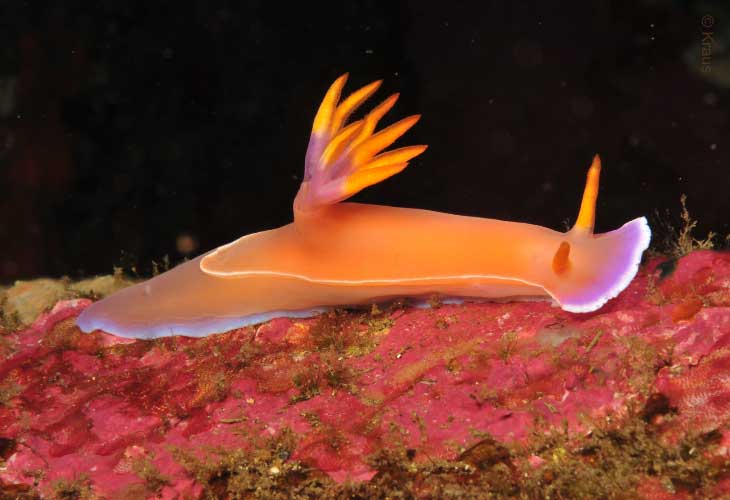
Hypselodoris bullocki – This species, found in Bali, Lembeh, Triton Bay, Wakatobi, and Ambon, is famous for its lavender hue and dark spots. It’s a beautiful find for those who appreciate subtle but striking patterns.
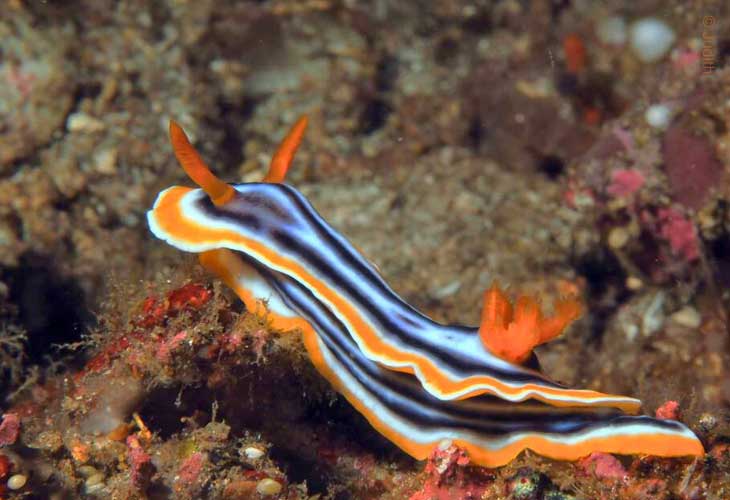
Chromodoris magnifica – As its name suggests, Chromodoris magnifica truly stands out. You can find this bold nudibranch in places like Raja Ampat, Ambon, Halmahera, Lembeh, and Bali. Its eye-catching combination of orange, white, and black makes it a favorite for underwater photographers.
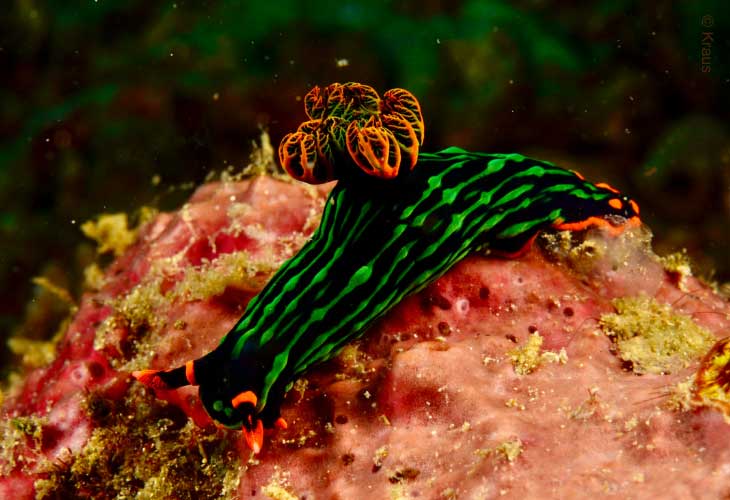
Nembrotha kubaryana – Known for its dramatic blend of black, green, and orange, Nembrotha kubaryana is another species divers love to spot in Wakatobi, Bali, Lembeh, Raja Ampat, and Alor.
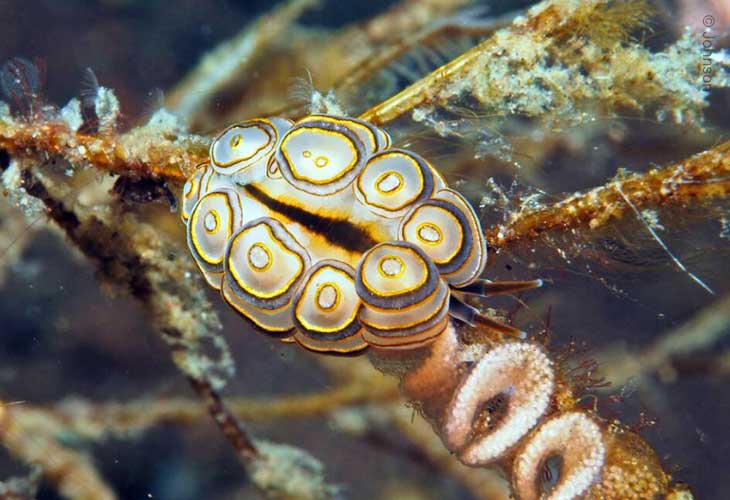
Doto greenamyori – This unique species has earned the nickname “Doughnut Doto” because of its shape. Doto greenamyori can be found in Tulamben, Wakatobi, and Misool, often hiding among hydroids and other small organisms.
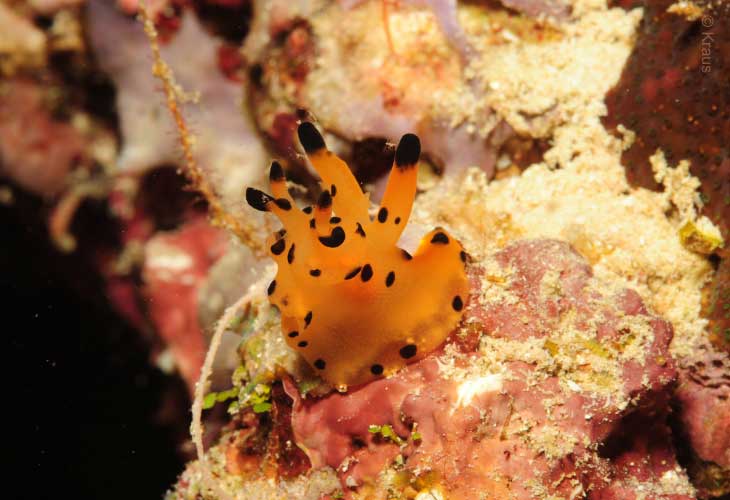
Thecacera pacifica – With its bright yellow color and black markings, this nudibranch resembles the famous character Pikachu! You can find it in Bali, Triton Bay, and Alor.
Please note: The above are the areas which offer a high chance of seeing these particular nudis. This being Indonesia, you can find the most unexpected species far outside their known range, for example: – While diving with AMD-B, Dr Richard Smith (Ocean Realm Images) found displaying male McCosker’s flasher wrasses 2,500km east of their previously recorded range – Okenia liklik nudis in Tulamben Bay, Bali (previously only recorded in Papua New Guinea and Luzon).
There are many other super-rare nudis that are scattered throughout the ocean so, who knows, maybe YOU will be lucky enough to find a new species and contribute to naming it 🙂
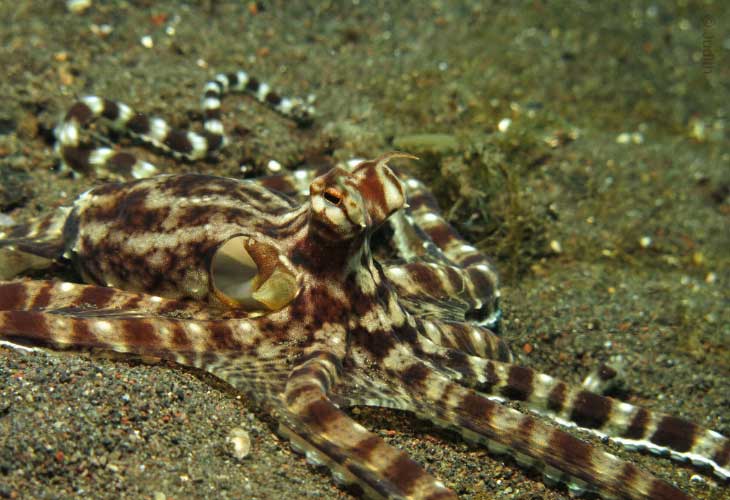
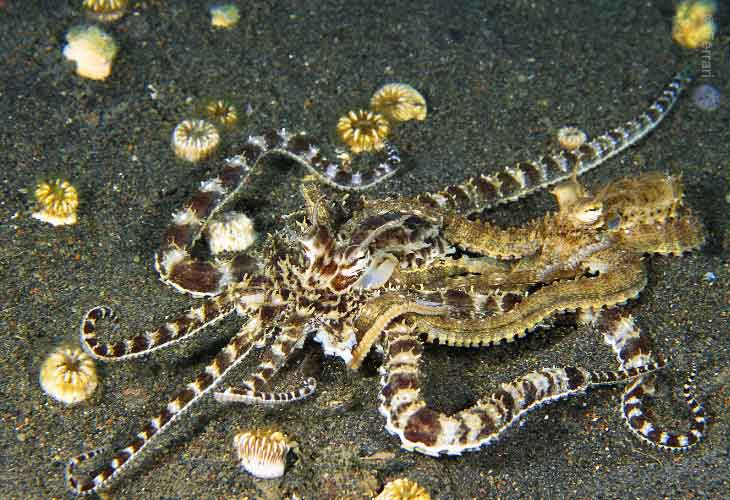
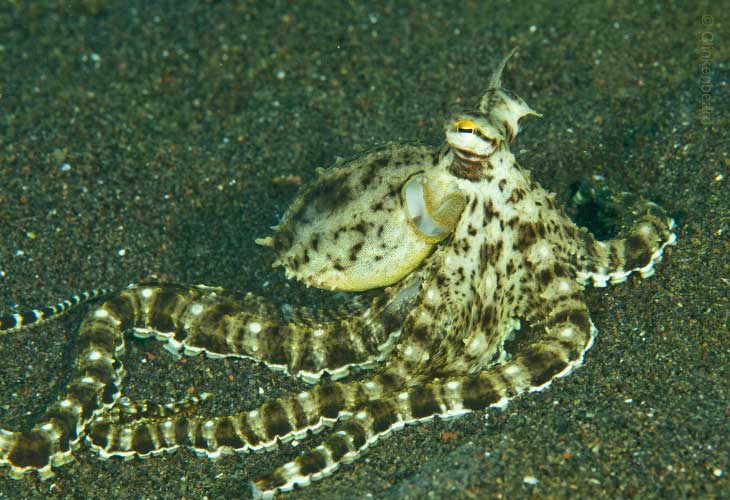
The mimic octopus is a fascinating and unique creature that has gained worldwide attention for its incredible ability to change its appearance to mimic other animals. This fascinating creature, scientifically known as Thaumoctopus mimicus, certainly lives up to its name. Derived from the Greek word “thauma” meaning “marvelous”. This charming creature is truly a master of disguise. It can mimic the appearance and movements of other animals, such as sea snakes, flounder, stingrays, jawfish, snake eels, and even lionfish.
Marinefacts
The mimic octopus is found in the waters of the Indo-Pacific, where it employs its mimicry abilities as a survival strategy to elude potential predators and capture prey. Mimic octopuses use mimicry as a defensive mechanism, predominantly during feeding. These organisms engage in diurnal foraging activities within exposed sandy areas, rendering them susceptible to potential predation. This phenomenon could explain the prevalence of poisonous and venomous marine organisms in mimicry.
The mimic octopus is exceptionally intelligent, particularly to its predators. The octopus learns which animals annoy its predators and assumes their form to repel potential danger. When bothered by damselfish, for instance, the mimic octopus takes the form of a sea snake that preys on damselfish.
But the mimic octopus is not just a master of disguise. It is also a skilled escape artist. When threatened, it can use its flexible body to squeeze through tiny spaces and disappear into the safety of the surrounding coral reefs.
The Challenges Mimic Octopus Face
While the mimic octopus is a master of disguise, it unfortunately faces threats from human activities such as overfishing and pollution. We must take action to preserve the natural habitat of this fantastic creature. The mimic octopus is a remarkable animal showcasing the astonishing diversity of life in our oceans. Its ability to mimic other animals is a testament to the adaptability and ingenuity of nature. We must do our part to protect this unique creature and the fragile ecosystems it calls home.
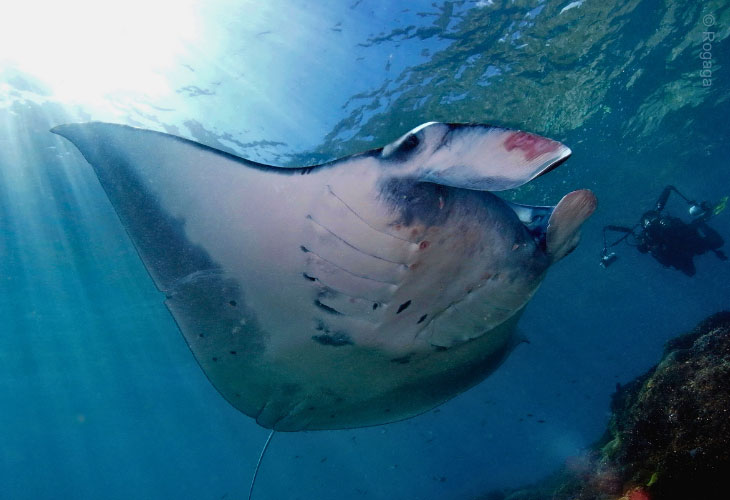
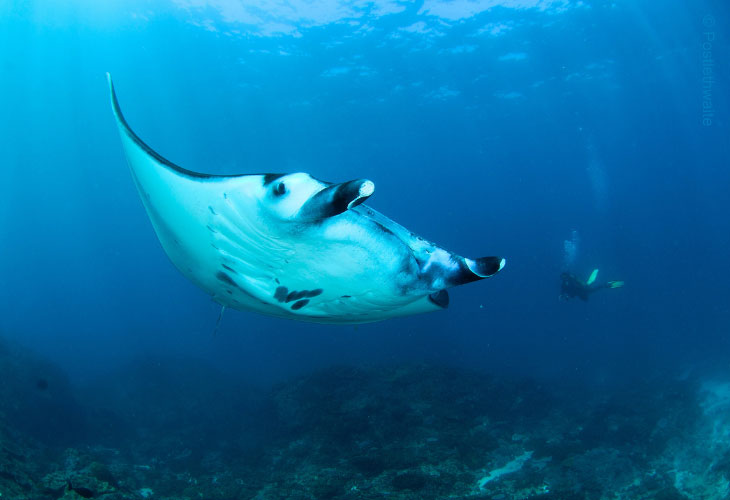
Manta rays are one of the world’s most exotic marine creatures! They are the largest rays and are highly intelligent. Mantas are found in tropical, sub-tropical and temperate waters around the globe.
There are two kinds of Mantas: The (pelagic) giant oceanic manta ray (Manta birostris), and the (coastal) reef manta ray (Manta alfredi).
Actually, a 2017 taxonomy study found that mantas are actually mobula rays (aka devil rays) – so Giant manta would be Mobula birostris, and Reef manta, Mobula alfredi – but everyone knows them as mantas 🙂
Manta rays in Indonesia
In 2014, the Indonesian government placed a country-wide ban on fishing and trade in Manta rays based on the simple fact that Mantas are worth a lot more in terms of tourist dollars than in fish markets. The estimated value of a single Manta ray over its lifetime is estimated to be USD1 million vs. USD40-500 when caught and killed.
In December 2020, the International Union for the Conservation of Nature (IUCN) changed the conservation status of the Giant Manta rays from Vulnerable to Endangered on the Red List of Threatened Species.
Scuba divers usually encounter Mantas at their feeding locations. They have several creative feeding techniques ranging from doing repeated somersaults to stay in one spot that’s packed with krill, or chain-feeding where they follow each other in a circle, mouths open, to create a cyclone effect, trapping their food in the spiral.
Where to Find Manta Rays
The four main locations to see Manta rays in Indonesia are:
Manta Point, SW Nusa Penida (just off mainland Bali) We are very lucky to see Manta rays year-round at Bali’s Manta Point. It is genuinely rare to dive here and not see them 🙂 In season (June-October), you may also see the weird-but-wonderful Southern sunfish, Mola alexandrini (known locally as Mola-Mola) and other pelagics such as tuna and Tiger mackerel.
Komodo National Park Diving here is year-round; the best months to see Manta rays are during the rainy season from late November to February.
The Alor archipelago Also known for sightings of Eagle rays as well as Mantas, plus sharks, Dog-tooth tuna and other pelagics.
Raja Ampat, West Papua During the October to March rainy season, although visibility is lower, the water is rich with nutrients meaning you are likely to see more Mantas 🙂
If the above has whet your appetite and, like so many of our ‘Bali & Beyond’ guests, you can’t wait to start planning – please contact your friendly AMD-B Dive Travel Consultant on Tours@AquaMarineDiving.com today to start YOUR planning!