Save! Join a Scheduled Trip or Course; check our “Specials” for limited time offers; subscribe to eNews for discounts, freebies, bonus offers in Bali and Beyond.
Organize diving in Bali and throughout Indonesia for your dive club or group of friends. Our dedicated team of specialists work with travel agencies around the world.
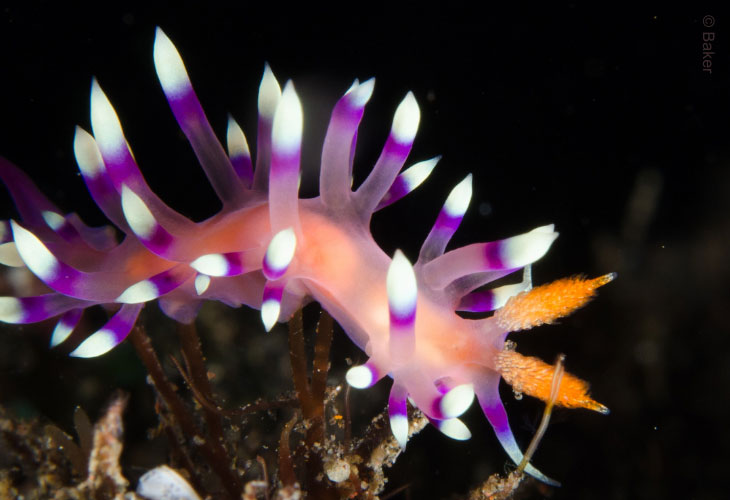
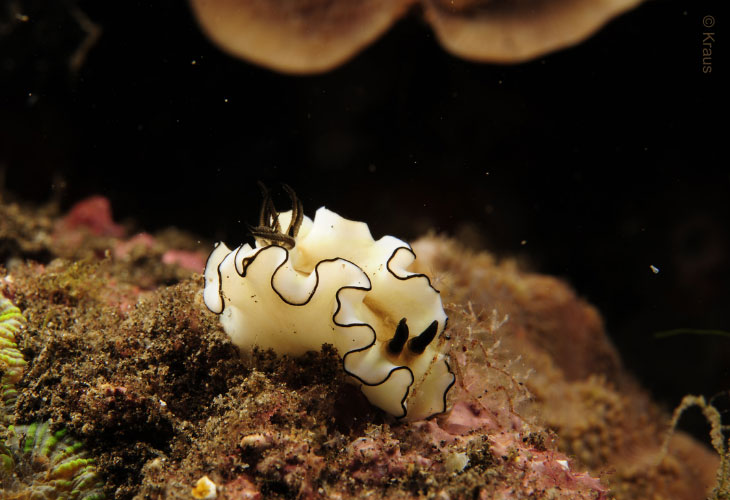
When it comes to shapes and colours, the variations found in nudibranchs never ceases to impress underwater photographers – and the rest of us!
There are over 3,000 species of nudibranchs worldwide, with new ones being identified regularly. These fascinating creatures are hermaphrodites, meaning they can mate with any individual of their species. Another intriguing fact is that nudibranchs are carnivorous, with diets that go beyond corals, algae, anemones, and sponges—they may even consume other nudibranchs.
Nudibranchs in Indonesia
To help you get started, here are five fantastic nudibranchs to look out for in Indonesia:
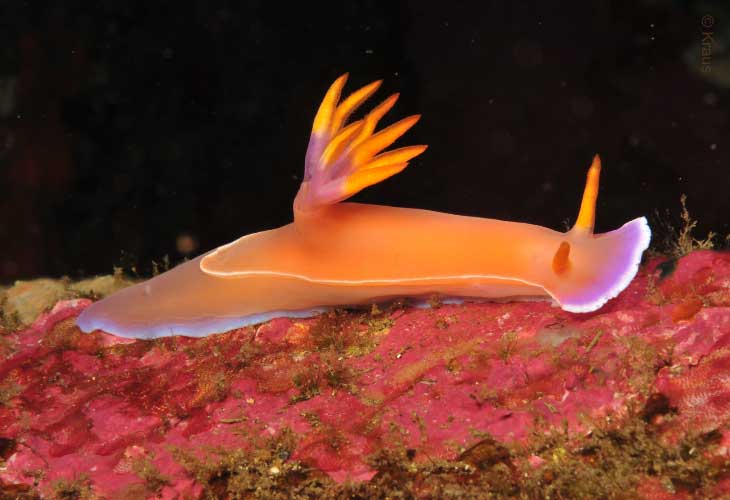
Hypselodoris bullocki – This species, found in Bali, Lembeh, Triton Bay, Wakatobi, and Ambon, is famous for its lavender hue and dark spots. It’s a beautiful find for those who appreciate subtle but striking patterns.
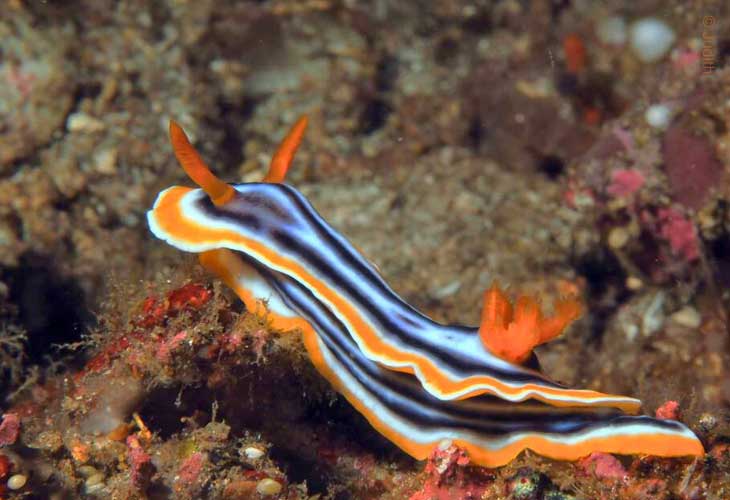
Chromodoris magnifica – As its name suggests, Chromodoris magnifica truly stands out. You can find this bold nudibranch in places like Raja Ampat, Ambon, Halmahera, Lembeh, and Bali. Its eye-catching combination of orange, white, and black makes it a favorite for underwater photographers.
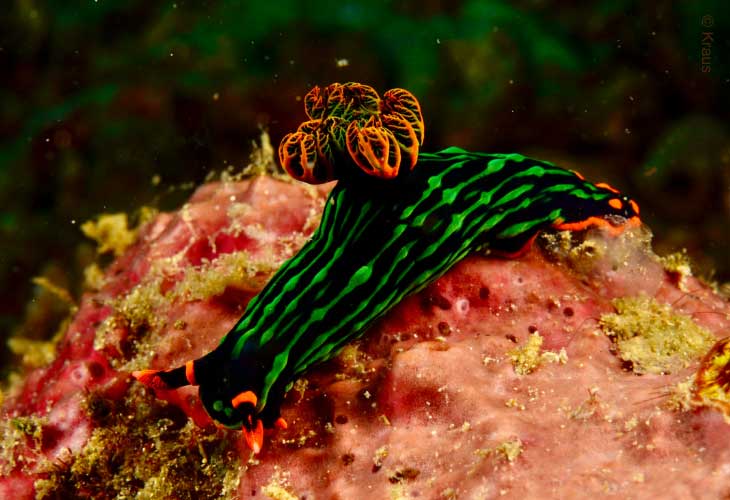
Nembrotha kubaryana – Known for its dramatic blend of black, green, and orange, Nembrotha kubaryana is another species divers love to spot in Wakatobi, Bali, Lembeh, Raja Ampat, and Alor.
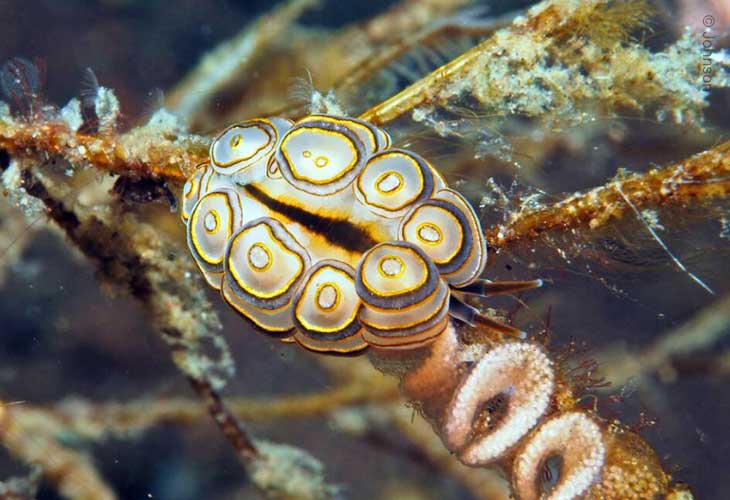
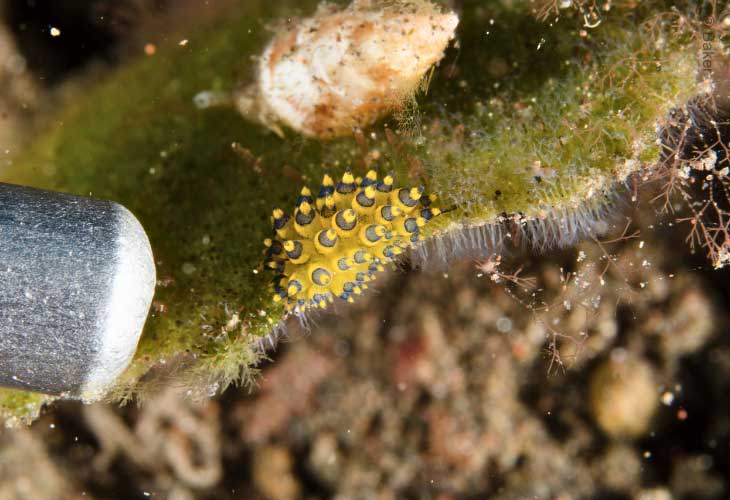
Doto greenamyori – This unique species has earned the nickname “Doughnut Doto” because of its shape. Doto greenamyori can be found in Tulamben, Wakatobi, and Misool, often hiding among hydroids and other small organisms.
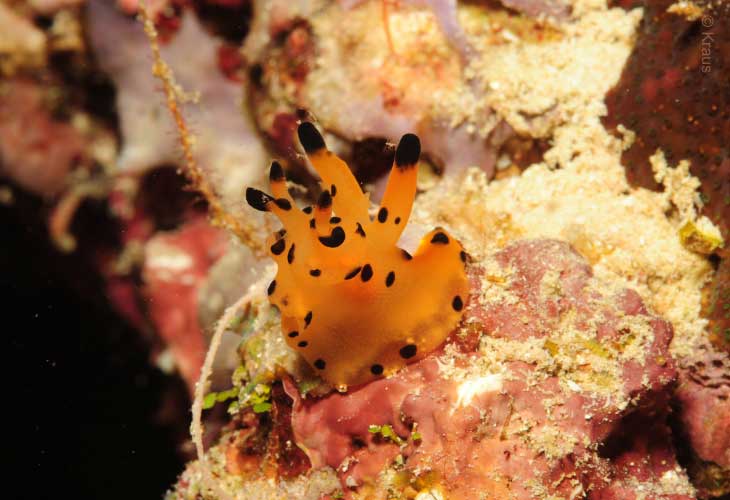
Thecacera pacifica – With its bright yellow color and black markings, this nudibranch resembles the famous character Pikachu! You can find it in Bali, Triton Bay, and Alor.
Please note: The above are the areas which offer a high chance of seeing these particular nudis. This being Indonesia, you can find the most unexpected species far outside their known range, for example: – While diving with AMD-B, Dr Richard Smith (Ocean Realm Images) found displaying male McCosker’s flasher wrasses 2,500km east of their previously recorded range – Okenia liklik nudis in Tulamben Bay, Bali (previously only recorded in Papua New Guinea and Luzon).
There are many other super-rare nudis that are scattered throughout the ocean so, who knows, maybe YOU will be lucky enough to find a new species and contribute to naming it 🙂
There are over 3,000 species of sea slugs and nudibranchs worldwide, with new species being identified all the time. The Indo-Pacific region, including Bali, is one of the richest areas in the world for nudibranch diversity. Researchers have found nearly 2,000 species in this region alone, with hotspots like Raja Ampat, Bunaken, and Tulamben recognized for their variety of sea slugs.
AquaMarine Diving – Bali (AMD-B) is offering the PADI Sea Slugs & Nudi Awareness Specialty, where you will learn general knowledge about sea slugs and nudibranchs and their fascinating traits.
What You Will Learn
In this course, you will enhance your general knowledge of sea slugs and nudibranchs while learning about their morphology, physiology, reproductive habits, and lifecycle. You will also explore their key features, habitats, diets, and the important role they play in the aquatic ecosystem. With some nudibranch populations declining due to environmental pressures, this course emphasizes the need for conservation efforts to protect these colourful creatures.
Our instructors are skilled at helping you identify the different species found in Bali’s waters, making sure that you can recognize both common and rare nudibranchs.
Practice What You Learn
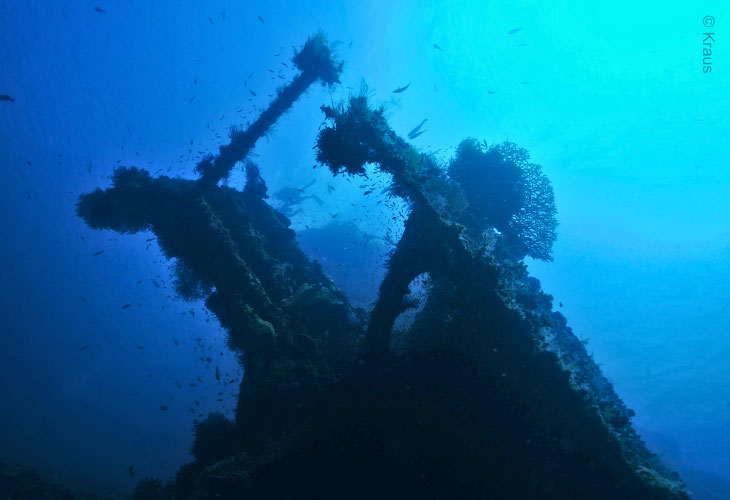
You can make the decision to only learn the theory or if you would like to have a first hand experience to observe these fascinating creatures in their natural habitat, and we will take you to Tulamben Bay, home to the 120m USAT Liberty Shipwreck applying everything you’ve learned.
Exclusively available at AquaMarine Diving – Bali (because we wrote it!), the PADI Indonesia Sea Slugs and Nudibranchs Awareness Distinctive Specialty will answer all those wiggly-niggly questions you have 🙂
Artificial reefs are man-made structures that help restore marine ecosystems. They provide places for corals to grow, attract fish, and support overall marine biodiversity. By mimicking natural reef environments, these structures help restore areas where coral reefs are damaged or missing.
How Artificial Reef Work
Corals need the right space to grow—they require enough sunlight, suitable temperatures, and the proper minerals to thrive. Naturally, corals will spread to open spaces, but this process takes a long time and relies on perfect conditions.
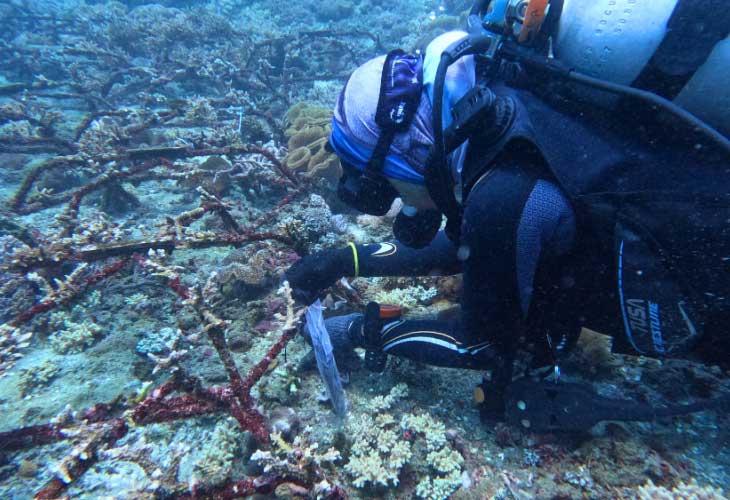
Coral reproduction happens in two main ways: sexually and asexually. In sexual reproduction, fertilized coral eggs (or larvae) drift and settle in open spaces, but they need ideal conditions—plenty of sunlight and no obstructions—for this to happen. Asexual reproduction occurs through fragmentation, where pieces of coral break off and grow independently. This is where artificial reefs come into play.
By planting coral fragments on artificial structures, we give corals a “jump-start” in their growth, reducing their vulnerability in the early stages. The rough surfaces of artificial reefs also provide excellent places for sexually reproduced corals to attach and grow, offering a stable environment for both types of coral reproduction. This helps speed up the recovery process and supports the overall health of the reef ecosystem.
What Happens After Installation
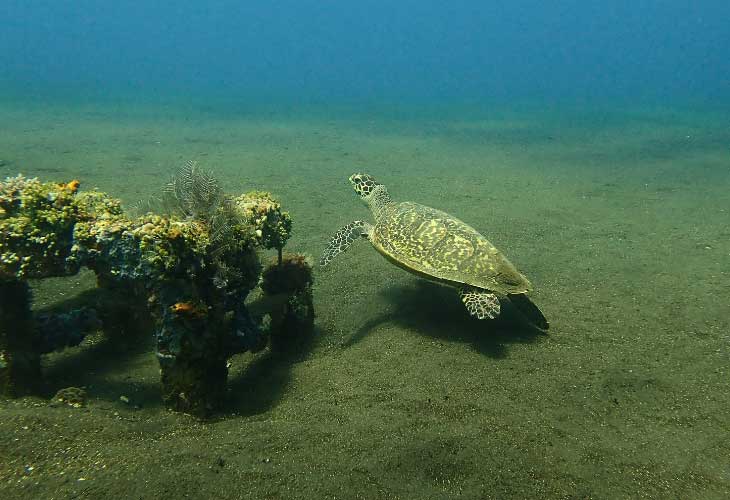
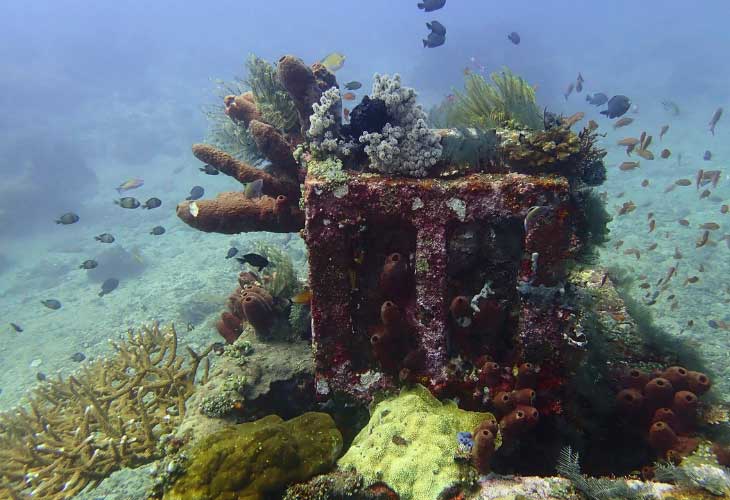
The impact of artificial reefs can be seen quickly. Fish are often attracted to the new structures within hours, swimming around and using the spaces for shelter. After a few weeks, you’ll notice algae, sponges, coralline algae, and even anemones starting to grow on the surfaces. Fish may also begin to protect the area as their territory.
Over time, the artificial reef becomes more complex, offering shelter, feeding grounds, and even breeding spaces for different species. This encourages a diverse range of marine life to thrive, making artificial reefs an important part of marine conservation efforts.
Artificial Reef in Bali
Artificial reefs in Bali are planned and developed by various groups, including NGOs, the government, local villages, and businesses. These structures come in all shapes and sizes, with some specifically designed to support coral restoration, while others serve as tourist attractions.
For example, in Amed, you’ll find pyramid-shaped artificial reefs alongside unique designs like the “Post Office” and “Temple.” Padangbai features hexagonal structures, small boats, and cube-like formations that enhance marine habitats.
In Tulamben, the USAT Liberty Shipwreck, though not intentionally planned as an artificial reef, has transformed into a thriving ecosystem, attracting divers from around the world. In Nusa Penida, a technique known as the “rope method” involves hanging corals on ropes, providing protection from predators and promoting faster growth.