

Banda Islands

Banda Islands

The Banda Islands are one of Indonesia’s top destinations for divers. Both experts and beginners will enjoy themselves here as the diving ranges from the shallow lagoon between Banda Neira and Gunung Api, to the vertical walls of Hatta Island, the most easterly in the group.

Located in Maluku (Molluca) province, the Banda Islands are 200km from the nearest port town of Ambon, and are made up of 9 islands. Long known for their spices, these islands have attracted regional and international traders for more than 3.000 years. The first Europeans arrived in 1500. The biggest and most valuable commodities were nutmeg and cloves as, at that time, they were only found in the Banda Islands.
Banda-Island

Diving in Banda

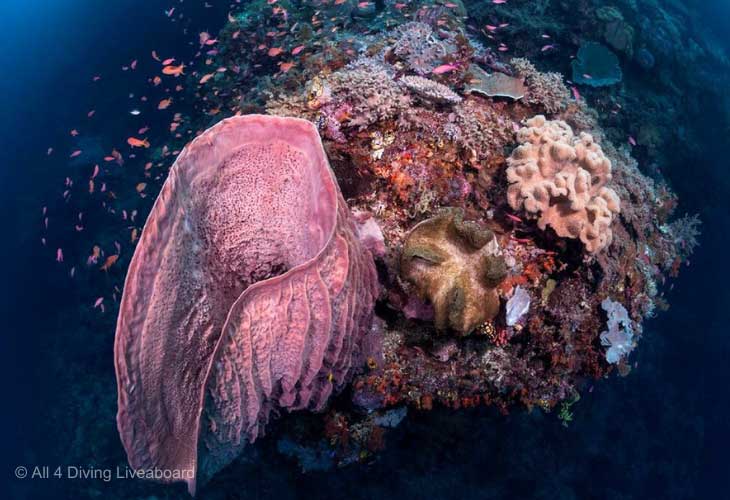
Set in the heart of Indonesia, the remoteness of the Banda Islands along with the low levels of human population, have meant less fishing and pollution pressures resulting in a vibrant, natural and healthy reef system.

Diving in the Banda Islands offers amazingly colourful walls, drop-offs, bommies and pinnacles!

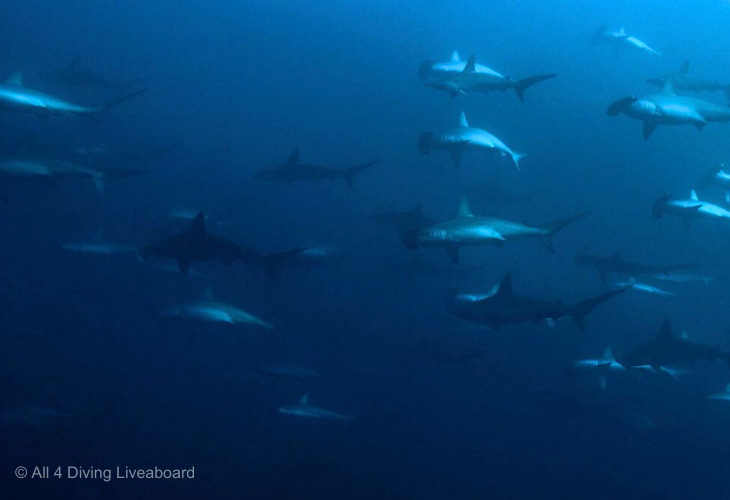
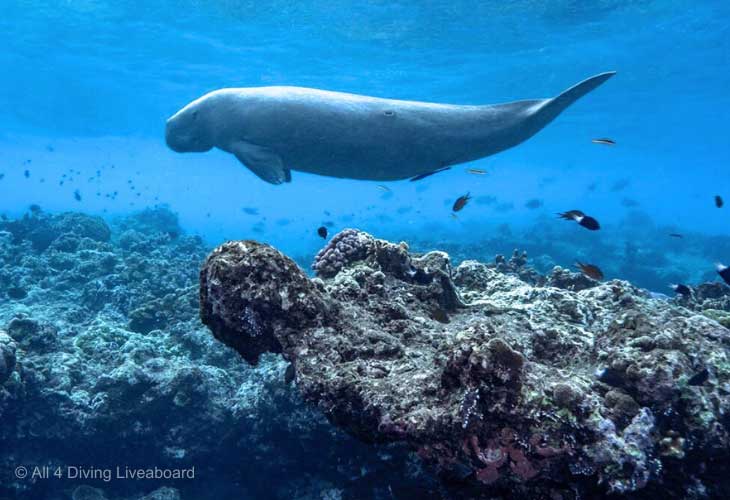
The very clear and nutrient-rich upwelling waters bring in schools of hammerhead sharks, and pelagics such as sunfish (Mola-Mola), Dogtooth tunas, reef sharks, and sailfish. There are various ‘hammerhead hotspots’ where – at certain times of the year (Sep-Nov is best) – schools of more than 200 hammerheads have been witnessed. Whales also frequently pass through the strait.
Diving-in-Banda

Banda Diving Season

Diving is usually comfortable with average visibility of 15-30 meters, mild currents and calm waters. December/January (NW monsoon) June-August (SE monsoon) can have turbulent seas. The ‘best’ months are April and October 🙂

How to reach Banda

The Banda Islands are often included in some liveaboard schedules when crossing from Komodo, Raja Ampat, Alor or Flores.

And of course dive resorts offer attractive diving/accommodation packages. There are domestic flights from Jakarta and Bali to Ambon via Ujung Pandang (Makassar), and from there to the Banda Islands.

For more info on the safari routes and durations at Banda Islands, and to start your planning, please make sure your AMD-B Travel Consultant is aware of your needs. As always, they will be more than happy to offer recommendations and make arrangements to suit your preferences. Contact us on Tours@AquaMarineDiving.com today!
Banda-Diving-Season

Diving Tips: Different Ways to Equalise

Equalising is Important for Divers

by Alfari, AMD-B’s 2025 Divemaster Intern

When you’re exploring the underwater world, one of the most essential skills to master is equalising. As you descend or ascend in water, the pressure on your body increases or decreases, affecting air spaces such as your ears, sinuses, and mask. To ensure comfort and safety, divers need to equalise these air spaces to prevent discomfort, injury, or barotrauma (damage caused by changes in pressure). Here are different methods of equalising that you can use to make your diving experience more enjoyable and safe.

Equalising-is-Important-for-Divers

Equalisation Techniques in Diving

The Valsalva Maneuver

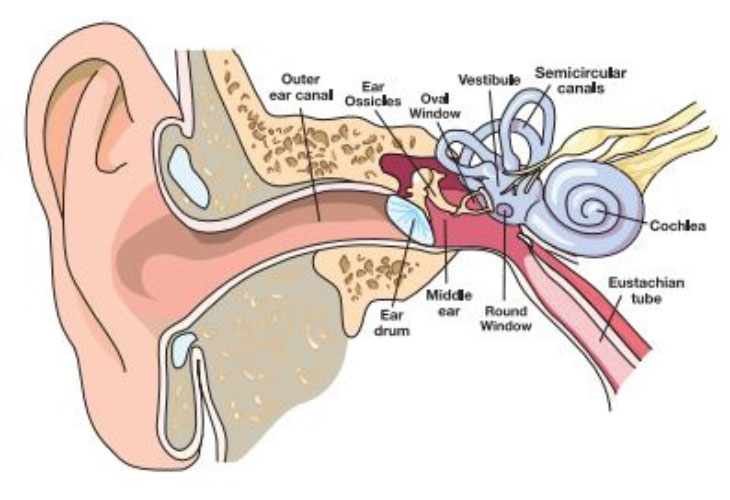
The Valsalva maneuver is the most commonly used technique to equalise during a dive. It involves pinching your nose shut and gently blowing air through your nose, which increases the pressure inside the Eustachian tubes, allowing air to enter the middle ear.

How to Perform:
– Pinch your nostrils closed;
– close your mouth;
– gently exhale through your nose (not forcefully) until you feel a slight pop or pressure equalisation in your ears.

When to Use: The Valsalva maneuver is typically used during the descent and ascent, especially if you feel any discomfort or fullness in your ears.

The Frenzel Maneuver

The Frenzel maneuver is a more advanced equalisation technique that can be effective for those who find the Valsalva maneuver difficult or ineffective, particularly at deeper depths. It involves using the muscles at the back of the throat to push air into the middle ear.

How to Perform:
– Pinch your nostrils closed;
– close your mouth;
– contract the muscles at the back of your throat (as if you are trying to make a “k” sound) to push air into the Eustachian tubes.

When to Use: The Frenzel maneuver is especially useful for deep diving, as it can be more effective at higher pressures where the Valsalva may not work as well.

Jaw Wiggling and Yawning

For some divers, especially at shallow depths or when equalising isn’t working with traditional methods, jaw wiggling or yawning can help to equalise the ears naturally.

How to Perform:
– Move your jaw up and down or side to side as if you’re chewing;
– you can also try yawning, which helps open the Eustachian tubes.

When to Use: This method can be particularly useful for those who are in shallow waters or when you feel slight pressure changes but don’t want to force any of the other techniques.

Best-Practices-for-Equalising

Best Practices for Equalising

1. Equalise Early and Often: Start equalising before you feel any discomfort and continue to do so regularly throughout your descent and ascent.

2. Descend Slowly: Descending too fast can make it harder to equalise in time. Always control your decent rate.

3. Do Not Force It: Never force air into your ears if you’re not able to equalise. Forceful attempts can cause injury. If you can’t equalise, ascend a few feet and try again.

In conclusion, equalising is a vital skill for all divers to ensure safe and enjoyable underwater experiences. Different equalisation techniques work better for different people, so experiment with each method and find what works best for you. Always remember to equalise early and often to prevent discomfort, and if you feel any pain or difficulty, it’s important to stop and seek guidance from your dive instructor. Happy diving!

Dive Site: Tulamben Area

Tulamben Area: from Muck to Pelagics Enthusiast

Tulamben Area offer a variety of conditions and types of diving. There are, in fact, quite a number of dive sites in the Tulamben Area (ie: outside Tulamben Bay). Most are mainly to the south east, but here we are only detailing the better-known sites. Because these sites are outside Tulamben Bay, they are more exposed and can be affected by currents however they are suitable for all levels beyond beginner.

Some of these Tulamben Area dive sites are popular areas for macro (muck) diving revealing many small critters in easy-to-photograph environments. The best known is Seraya Slope.

Tulamben-Area-Dive-Site

Tulamben Area Dive Sites

These Tulamben Area dive sites include Seraya for muck-diving and Batu Kelebit, Palung-Palung, Kubu, and Emerald for other marinelife including reef sharks, Napoleon wrasse and Bumphead parrotfish.

Seraya Slope

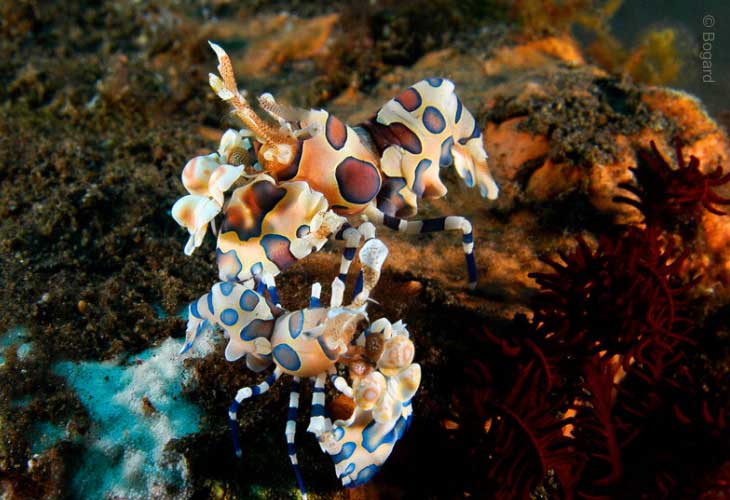
As well as the main, central site called ‘Seraya’, named for a nearby resort, this small area also encompasses various individual muck sites. As with all the Tulamben Area dive sites, these muck diving sites have a black sand bottom and little coral growth. Seraya Slope is one of our favourite muck sites for interesting discoveries. The macro life here includes a wide range of shrimps, pipefish, crabs, nudibranchs, and other fabulous creatures.

Seraya-Slope-Shrimps-Harlequin

Kubu

Muck divers will find many nudis and other macro creatures dotted around the black sand slope, together with eels, cuttlefish, Leaf scorpionfish and more.

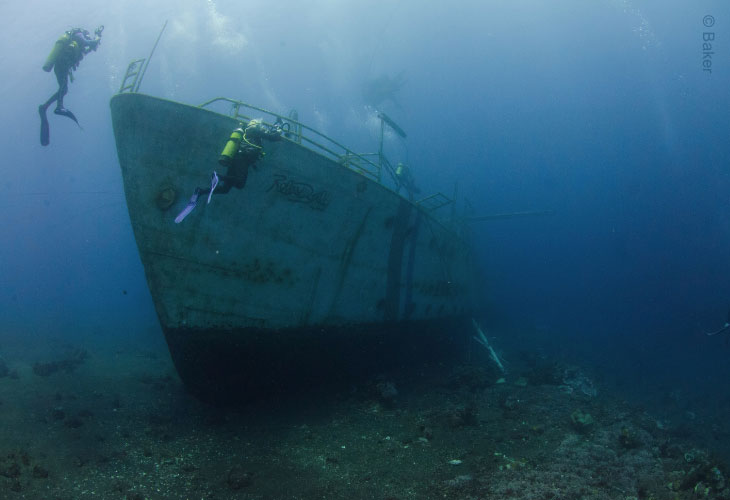
Two small walls (approx 25m depth with viz of 20m) offer gentle drift-diving past numerous sea fans (with Pygmy seahorses) and a variety of sponges, as well as hard and soft corals. Kubu has the highest concentrations of lionfish and Blue-spotted rays in the Tulamben area.

Kubu-Wreck-and-Divers

Palung-palung

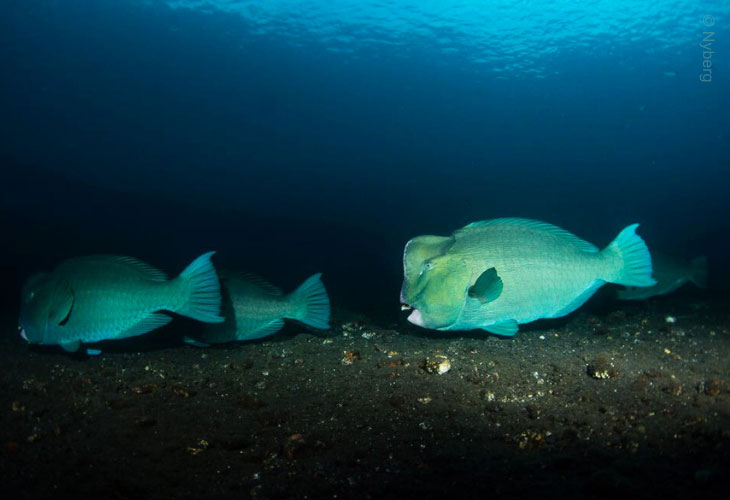
Palung-palung is covered in colourful soft corals and alive with butterflyfish, sea fans, swaying Garden eels, hunting day octopus, and large schools of fusiliers. Also, you will quite often see some of Tulamben’s school of huge Bumphead parrotfish munching on the coral and White-tip and Black-tip reef sharks looking for their next meal.

Palung-palung-Parrotfish-Bumphead

Batu Kelebit

An unusual and exciting site just outside Tulamben Bay that provides opportunities to see pelagics as well as reef life different from that inside the Bay.

Batu Kelebit is basically two large rocks that lie just offshore. As you follow the sloping reef deeper, the dive site becomes more dramatic. You’ll see three steep ridges encrusted with a wonderful diversity of hard and soft corals, fire and table corals, many beautiful sea fans, and sponges.

Tulamben-Area-Batu-Kelebit-Dartfish-Fire

Emerald

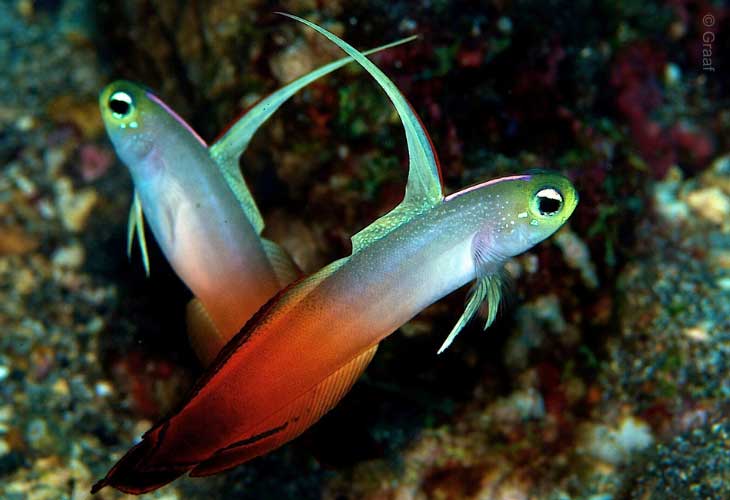
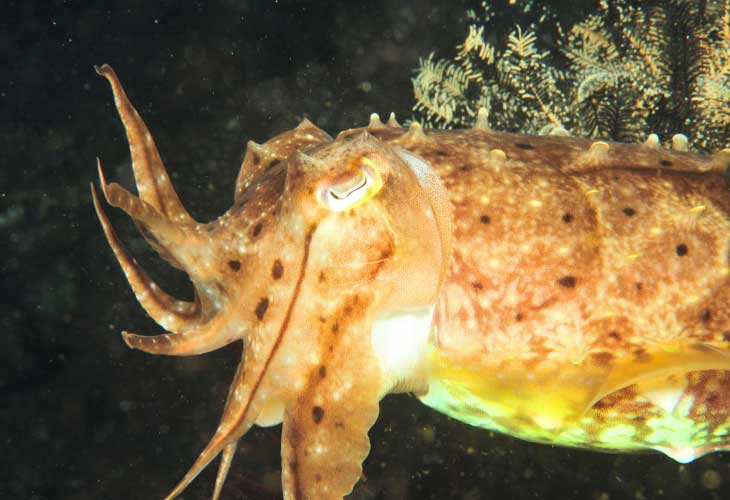
There is a sunken car and some other pieces of artificial reef on the sandy slope – which itself is a natural home to cuttlefish, gobies, Decorated dartfish, Helmut gurnard and nudis. There are some areas of Garden eels too.

Around 20-30m depth, the reef becomes richer with a large number of sponges, including Barrel sponges, and is a good place to see reef sharks. Both Thresher sharks and Eagle rays are (occasionally) seen here. There is a small drop-off with Elephant ear sponges and hard corals, and some large, semi-resident Napoleon wrasse.

Tulamben-Area-Emerald-Cuttlefish

AquaMarine Diving – Bali could easily put together a 7+ Day Tulamben Bay and Tulamben Area Dive Sites Safari with 3-4dives/day at a different site each day.

Tulamben Area Day Trip

Click below for more Bali Diving Information: