

How Does Carbon Pollution Impact Our Ocean?

How Does Carbon Pollution Impact Our Ocean?

The ocean plays a vital role in absorbing carbon dioxide (CO₂) from the atmosphere, which helps regulate our planet’s climate. When CO₂ dissolves in seawater, it helps reduce the amount of this gas in the air, acting as a natural “carbon sink“. However, human activities—particularly through the burning of fossil fuels, deforestation, and industrial processes—are producing more CO₂ than ever before. As the ocean absorbs more of this excess carbon, it starts to change the water’s chemistry, leading to what we call ocean acidification.
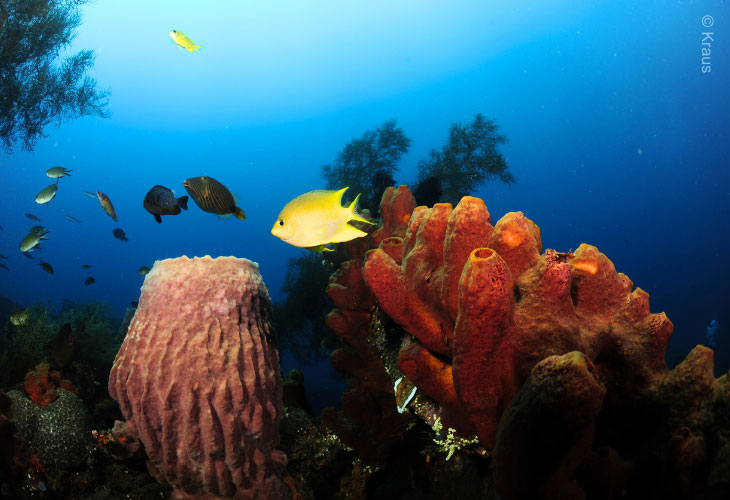
Sponge-and-Golden-Damsel

Ocean Acidification

When the ocean takes in too much CO₂, the water becomes more acidic. This acidification affects marine life, especially those that rely on calcium carbonate to build their shells and skeletons. Corals, for instance, struggle to maintain their reefs, making them weaker and slower to grow. This weakening of entire coral reef structures can lead to a loss of biodiversity and impact the ecosystems that depend on these reefs.

Shellfish like oysters and clams also find it harder to form their shells, leading to fewer surviving offspring. Even tiny creatures like certain plankton, which are a crucial part of the food chain, can have their shells dissolve in more acidic waters. Sea urchins, which use calcium carbonate for their spines, also face challenges in these changing conditions.
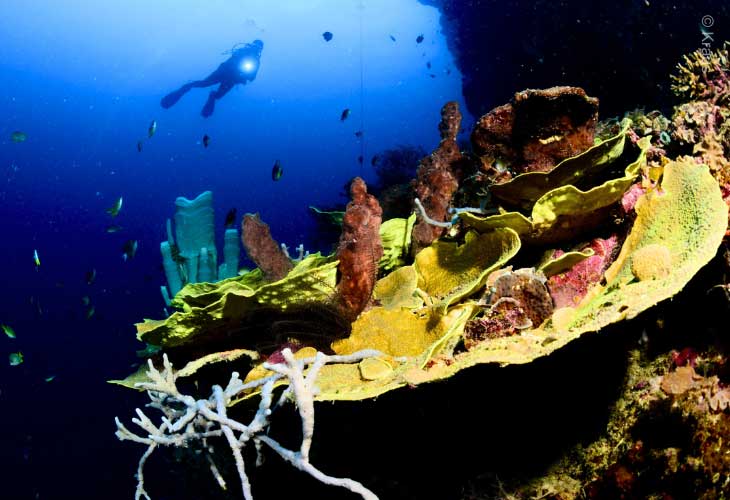
Ocean-Acidification

Why Ocean Acidification Matters?

As ocean acidification continues, it poses a serious threat to the health of marine ecosystems. Corals, shellfish, and other sea creatures that depend on calcium carbonate are finding it harder to survive in these more acidic waters. This not only affects the animals themselves but also the larger marine environment, including the communities that rely on healthy oceans for food and livelihoods. The combined effects of ocean acidification, coral reef loss, and disrupted fisheries can have significant economic consequences, particularly for coastal communities dependent on marine resources. Reducing carbon emissions is crucial to slowing down this process and protecting the ocean’s delicate balance.

By Fahmi, AMD-B’s 2024 Divemaster Intern
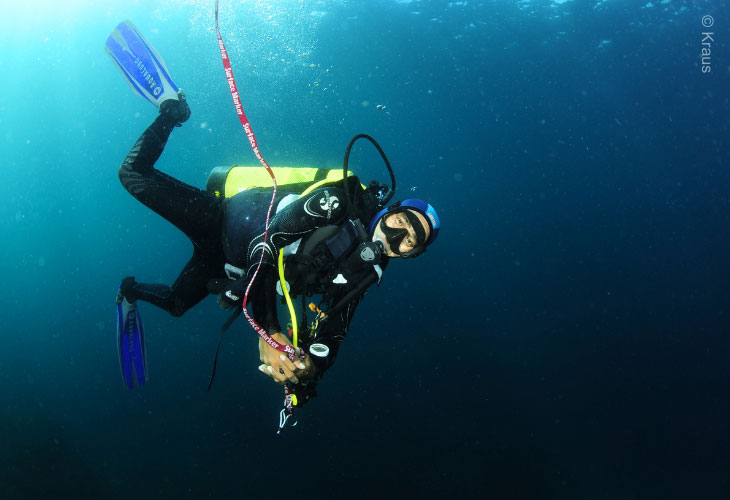
Dive Course: Advanced Open Water Diver

Advanced Open Water Diver Course

Advanced Open Water Diver course will help you fine-tune your diving skills, increase your abilities and experience, all while exploring Bali’s best dive sites.

This course is a structured programme that gives certified divers the chance to sample some of diving’s most popular specialities. You will practice navigation and buoyancy, try deep diving and make three speciality dives of your choosing.

You will also gain additional experience and skills with one of AquaMarine’s experienced PADI instructors.

Advanced-Open-Water-Diver-Course

About the Course

AquaMarine Diving – Bali’s PADI Advanced Open Water Diver Course is the next step in getting certified to dive in deeper depths and experience the different kinds of adventure diving available.

Students need to complete five dives: Two Core Dives: Deep and Underwater Navigation; and three Elective Dives. The Elective Dives allow divers to sample 3 diving specialities that interest them. At AquaMarine, we offer many PADI Specialities. Here are a few:
– Boat Diver
– Digital Underwater Photographer
– Drift Diver
– Fish Identification
– Enriched Air/Nitrox Diver
– Night Diver
– Peak Performance Buoyancy
– Underwater Naturalist
– Underwater Navigator
– Wreck Diver

After some skill practice with your instructor, you will make five open water dives. There is no exam because this course is truly about having fun and gaining experience.

For every speciality dive you complete, you can earn credit toward PADI speciality certifications.

PADI-AOW-Diver-Course

After completing the course, you will be a more confident diver. With a wide range of dive experience under your (weight)belt, you will be ready to start thinking about the next step: PADI Rescue Diver or PADI Junior Rescue Diver course.

PADI Advanced Open Water Diver Course

Click below for more PADI Dive Courses Information:

Diving Tips: Different Ways to Equalise

Equalising is Important for Divers

by Alfari, AMD-B’s 2025 Divemaster Intern

When you’re exploring the underwater world, one of the most essential skills to master is equalising. As you descend or ascend in water, the pressure on your body increases or decreases, affecting air spaces such as your ears, sinuses, and mask. To ensure comfort and safety, divers need to equalise these air spaces to prevent discomfort, injury, or barotrauma (damage caused by changes in pressure). Here are different methods of equalising that you can use to make your diving experience more enjoyable and safe.

Equalising-is-Important-for-Divers

Equalisation Techniques in Diving

The Valsalva Maneuver

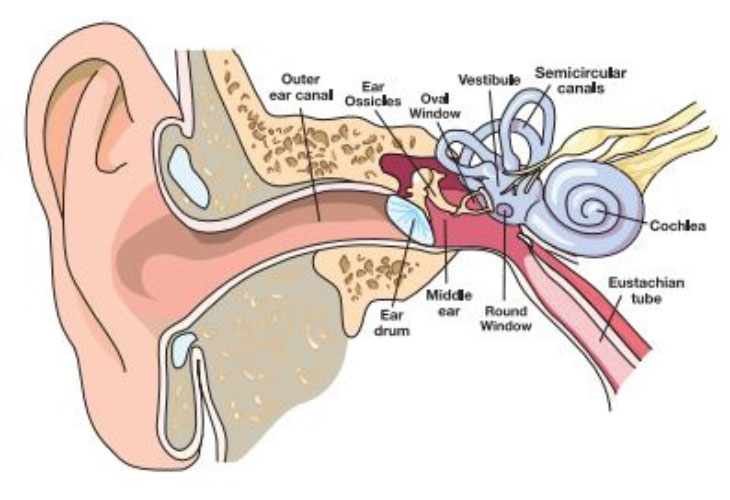
The Valsalva maneuver is the most commonly used technique to equalise during a dive. It involves pinching your nose shut and gently blowing air through your nose, which increases the pressure inside the Eustachian tubes, allowing air to enter the middle ear.

How to Perform:
– Pinch your nostrils closed;
– close your mouth;
– gently exhale through your nose (not forcefully) until you feel a slight pop or pressure equalisation in your ears.

When to Use: The Valsalva maneuver is typically used during the descent and ascent, especially if you feel any discomfort or fullness in your ears.

The Frenzel Maneuver

The Frenzel maneuver is a more advanced equalisation technique that can be effective for those who find the Valsalva maneuver difficult or ineffective, particularly at deeper depths. It involves using the muscles at the back of the throat to push air into the middle ear.

How to Perform:
– Pinch your nostrils closed;
– close your mouth;
– contract the muscles at the back of your throat (as if you are trying to make a “k” sound) to push air into the Eustachian tubes.

When to Use: The Frenzel maneuver is especially useful for deep diving, as it can be more effective at higher pressures where the Valsalva may not work as well.

Jaw Wiggling and Yawning

For some divers, especially at shallow depths or when equalising isn’t working with traditional methods, jaw wiggling or yawning can help to equalise the ears naturally.

How to Perform:
– Move your jaw up and down or side to side as if you’re chewing;
– you can also try yawning, which helps open the Eustachian tubes.

When to Use: This method can be particularly useful for those who are in shallow waters or when you feel slight pressure changes but don’t want to force any of the other techniques.

Best-Practices-for-Equalising

Best Practices for Equalising

1. Equalise Early and Often: Start equalising before you feel any discomfort and continue to do so regularly throughout your descent and ascent.

2. Descend Slowly: Descending too fast can make it harder to equalise in time. Always control your decent rate.

3. Do Not Force It: Never force air into your ears if you’re not able to equalise. Forceful attempts can cause injury. If you can’t equalise, ascend a few feet and try again.

In conclusion, equalising is a vital skill for all divers to ensure safe and enjoyable underwater experiences. Different equalisation techniques work better for different people, so experiment with each method and find what works best for you. Always remember to equalise early and often to prevent discomfort, and if you feel any pain or difficulty, it’s important to stop and seek guidance from your dive instructor. Happy diving!