


How Artificial Reefs Support Marine Life

Artificial Reefs: How They Support Marine Life

Artificial reefs play an increasingly important role in supporting marine ecosystems as natural coral reefs face growing environmental pressure. These human-made structures are placed on the seafloor to create new habitats where marine organisms can live, grow, and thrive. Built from materials such as concrete, steel, or decommissioned ships, artificial reefs help restore balance in areas where natural habitats have declined.

Creating New Habitats in the Ocean

Natural coral reefs around the world are threatened by climate change, pollution, and human activities. Because of this, artificial reefs provide alternative habitats that help marine species survive and adapt.

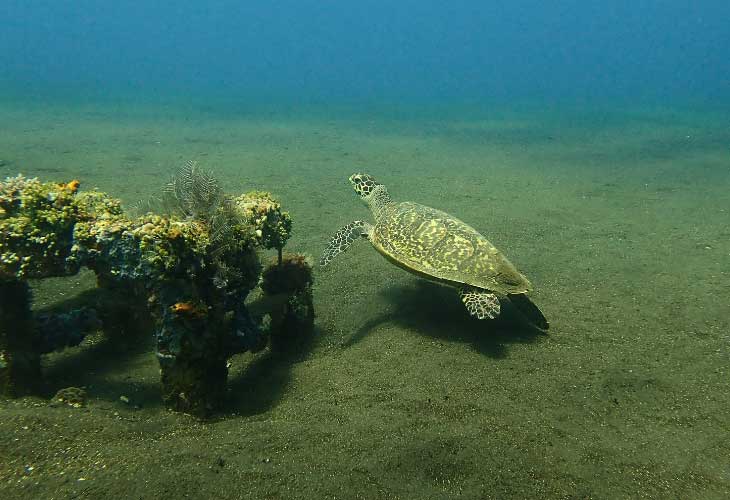
Once installed, artificial reefs quickly attract marine life. Fish, crustaceans, and other organisms use the structures as shelter from predators and strong currents. Over time, these habitats increase biodiversity by supporting a wide variety of species within a concentrated area.
Artificial-Reefs-Support-Marine-Life

How Artificial Reefs Develop into Ecosystems

Artificial reefs develop gradually through natural ecological processes rather than becoming ecosystems instantly.

At first, small fish and invertebrates gather around the structure for protection. Soon after, algae and microorganisms begin growing on the surfaces. As conditions stabilise, corals, sponges, and other reef-building organisms attach themselves and expand.

Eventually, artificial reefs transform into complex ecosystems. These communities provide food sources, breeding grounds, and shelter, allowing marine populations to grow naturally.

Supporting Fisheries and Sustainable Tourism

Artificial reefs also support local fisheries by increasing fish populations in targeted areas. When managed responsibly, this can contribute to more sustainable fishing practices.

Additionally, artificial reefs attract divers and snorkellers who want to explore unique underwater environments. This reduces pressure on fragile natural reefs while still allowing people to experience marine biodiversity responsibly. For coastal communities, this creates both ecological and economic benefits.
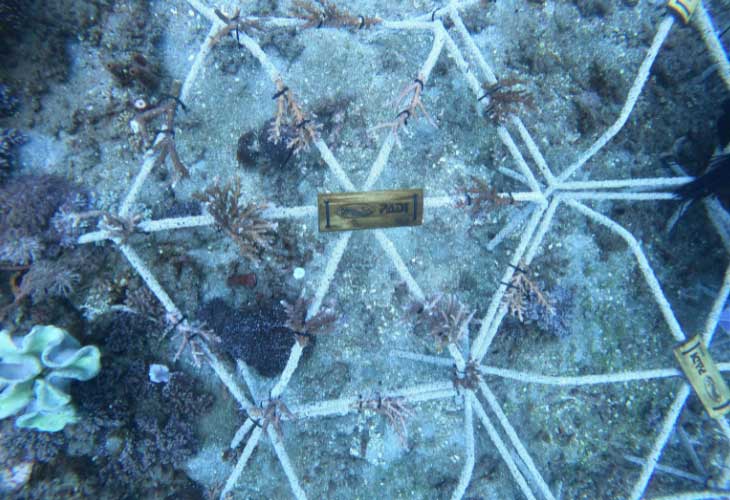
AMD-B’s-Complete-Installation

Challenges and Responsible Reef Design

Despite their benefits, artificial reefs must be carefully designed and managed. The materials used need to be non-toxic, durable, and environmentally safe. Poor planning can harm marine habitats instead of helping them.

Proper placement is essential so artificial reefs complement existing ecosystems rather than disrupt natural reefs. Regular monitoring ensures the structures function as intended, and maintenance may be required to remove debris or prevent damage.

A Valuable Tool for Ocean Conservation

Artificial reefs demonstrate how thoughtful human intervention can positively support marine environments. By creating habitats, encouraging biodiversity, and supporting sustainable tourism and fisheries, artificial reefs strengthen ocean ecosystems.

Although they cannot replace natural reefs, artificial reefs remain valuable tools in marine conservation, providing marine life with new spaces to grow while helping protect the oceans for future generations.

By Fahmi, AMD-B’s 2024 Divemaster Internship
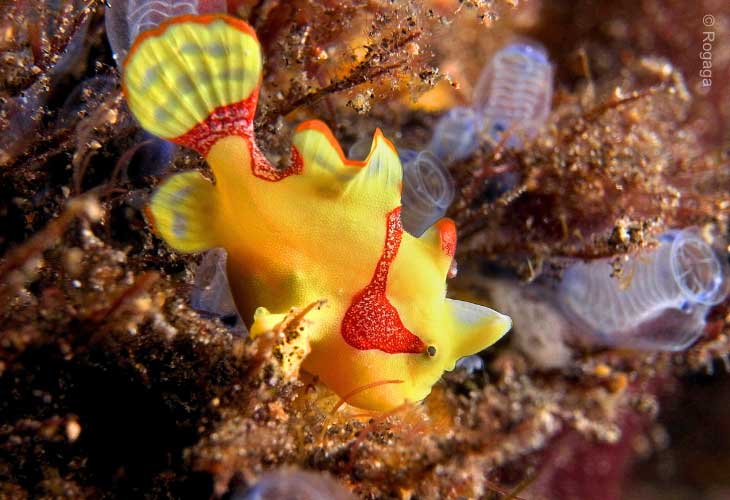
The Frogfish Family

Frogfish Family: Incredible Camouflage, Colourful Species & Hunting Secrets

Frogfish are among the ocean’s most unusual and fascinating creatures. Part of the anglerfish family, they’re masters of disguise, relying on stealth rather than speed to survive. Their lumpy, textured bodies let them blend effortlessly with coral, sponges, or rocks, making them almost invisible to predators and prey alike.

They are ambush predators, using a specialised dorsal spine called an illicium as a lure. With a flick, unsuspecting prey is drawn close — then, in a fraction of a second, the frogfish snaps it up. Adding to their uniqueness, they can “walk” along the seabed using their pectoral fins, moving in a way that almost mimics legs.

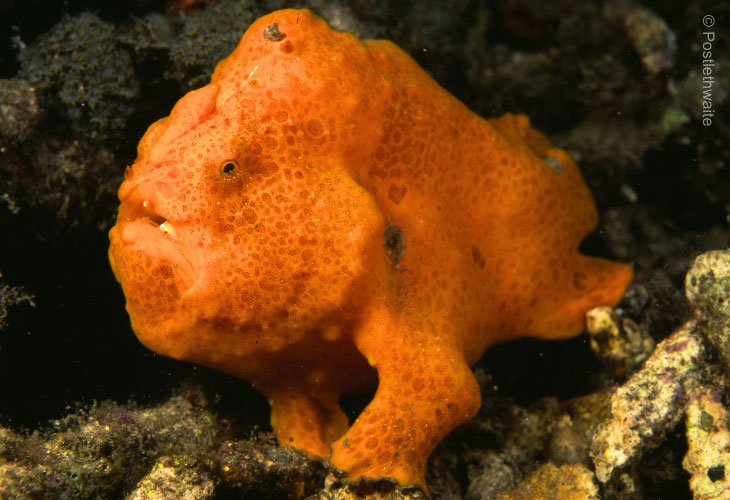
Warty Frogfish

The Warty Frogfish gets its name from the small wart-like bumps covering its body. It comes in a range of colours, which it can change to match its surroundings perfectly. Often found resting on coral reefs, this species is a favourite for underwater photographers, thanks to its unusual and striking appearance.

Warty-Frogfish

Warty Frogfish (Antennarius maculatus)

Freckled Frogfish

Covered in tiny, freckle-like spots, the Freckled Frogfish is a master of camouflage. Preferring rocky reef habitats, it can be extremely difficult to spot unless it moves, making encounters with this species a rare and exciting moment for divers.

Freckled-Frogfish

Freckled Frogfish (Antennarius coccineus)

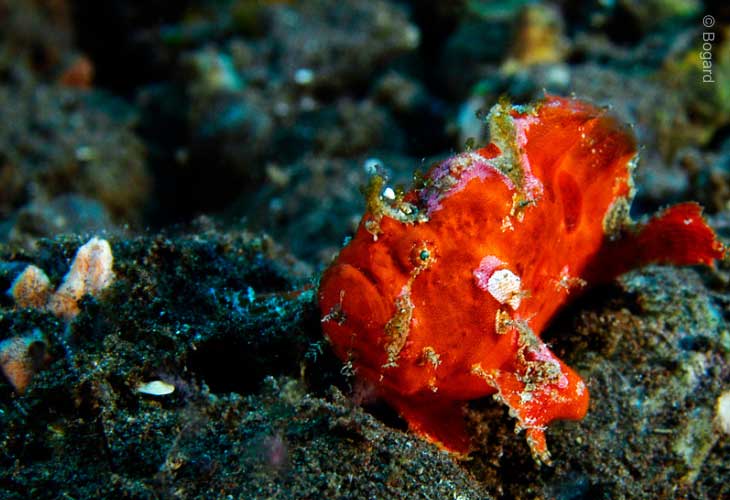
Painted Frogfish

The Painted Frogfish is known for its vivid colours and patterns, which resemble the vibrant tones of reef sponges. Its wide range of colour morphs ensures that no two individuals are alike. This species is both fascinating to watch and a popular subject for underwater photography.

Painted-Frogfish

Painted Frogfish (Antennarius pictus)

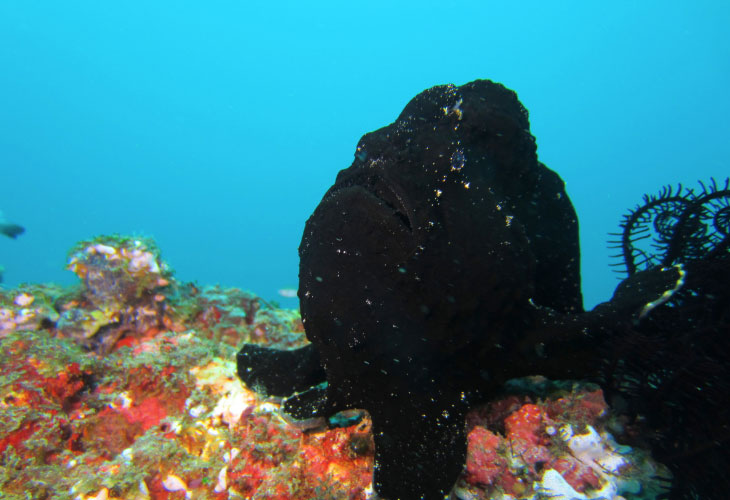
Giant Frogfish

The Giant Frogfish is the largest species in the group, reaching up to 15 inches in length. Despite its size, it remains a master of disguise, often mistaken for a sponge or coral outcrop. Spotting one is always a highlight for divers, showcasing just how cleverly adapted these fish are to life on the reef.

Giant-Frogfish

Giant Frogfish (Antennarius commerson)

Frogfish are a reminder that in the ocean, sometimes invisibility beats speed. Whether you’re diving, snorkelling, or photographing marine life, encountering a frogfish feels like discovering a hidden gem. Their quirky shapes, vibrant colours, and patient hunting techniques make them one of the most intriguing and unusual creatures beneath the waves.

By Hafid, AMD-B’s 2025 Divemaster Intern

Dive Site: Coral Garden

Coral Garden: Tulamben Bay’s House Reef

Coral Garden is located in the middle section of Tulamben Bay and is often referred to as the area’s house reef. The site stretches for approximately 150 metres along the shoreline and is characterised by shallow depths and generally calm conditions, making it suitable for a wide range of divers as well as snorkellers.

Depths start at around 3 metres and gradually slope down to approximately 8–12 metres. Because of this shallow profile, Coral Garden is commonly used for check dives, training dives, relaxed daytime dives, and night dives.

Coral Garden is well suited for:
– beginner and student divers;
– divers looking for an easy, shallow dive;
– underwater photographers focused on macro life;
– night diving enthusiasts.

Its central location also makes it easy to combine with nearby sites, including the USAT Liberty Shipwreck, as part of a single dive day or longer dive programme.

Coral-Garden-Tulamben

Reef Layout and Coral Coverage

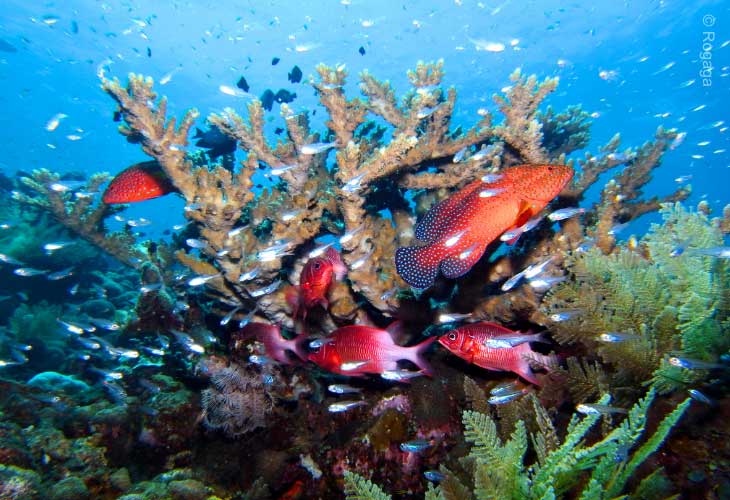
The reef features a mix of hard and soft corals, including table corals, anemones, and sponges. Coral coverage is well established and supports a variety of marine life. An artificial reef structure has also been placed within the area, providing additional habitat for fish and invertebrates.

The seabed is mainly sandy with scattered coral patches, allowing for easy navigation and long bottom times. Visibility is generally good, and currents are usually mild.

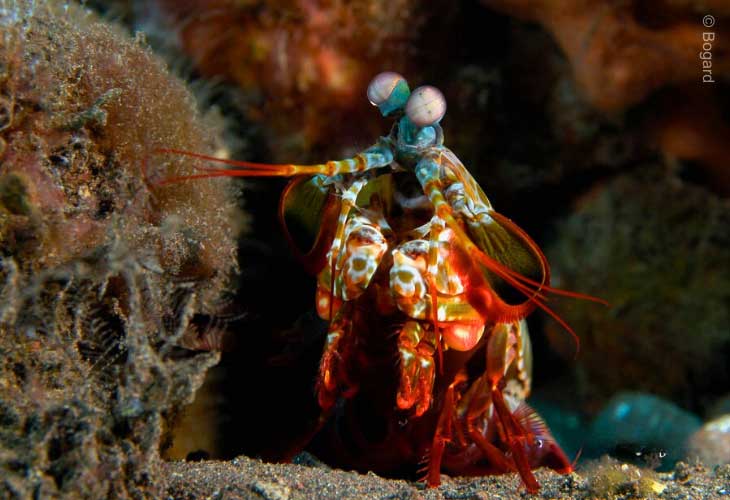
Peacock-Mantis-Shrimp

Marine Life at Coral Garden

Coral Garden is particularly known for its macro life, making it a popular site for underwater photographers. Divers who move slowly and observe carefully are often rewarded with interesting and varied sightings.

Marine life commonly encountered includes:
– peacock mantis shrimp and other shrimp species,
– blue ribbon eels,
– nudibranchs and other small invertebrates,
– cuttlefish and octopus,
– frogfish and ghostpipefish.

Larger species may also be seen occasionally, including giant groupers, bumphead parrotfish, and sometimes black-tip reef sharks, especially along the deeper edges of the site.

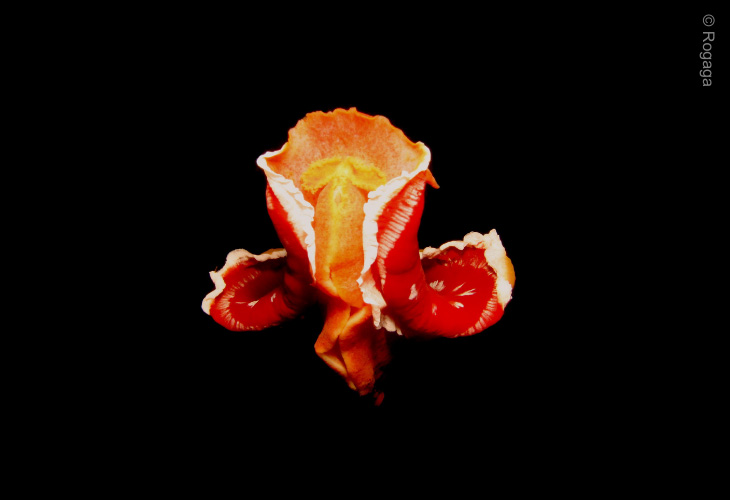
Spanish-Dancers

Night Diving at Coral Garden

Thanks to its shallow depth and easy access, Coral Garden is a popular night dive site in Tulamben Bay. After dark, many nocturnal species emerge from the reef, offering a very different experience compared to daytime dives.

Divers may encounter Spanish dancers, hunting octopus, and active crustaceans. The calm conditions make this site especially suitable for divers who are new to night diving.

Tulamben Bay Day Trip

Click below for more Bali Diving Information: