

Bangka Archipelago in North Sulawesi
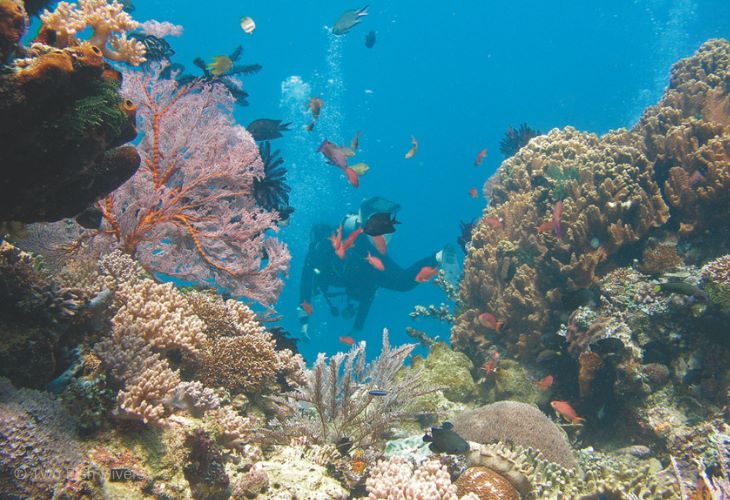
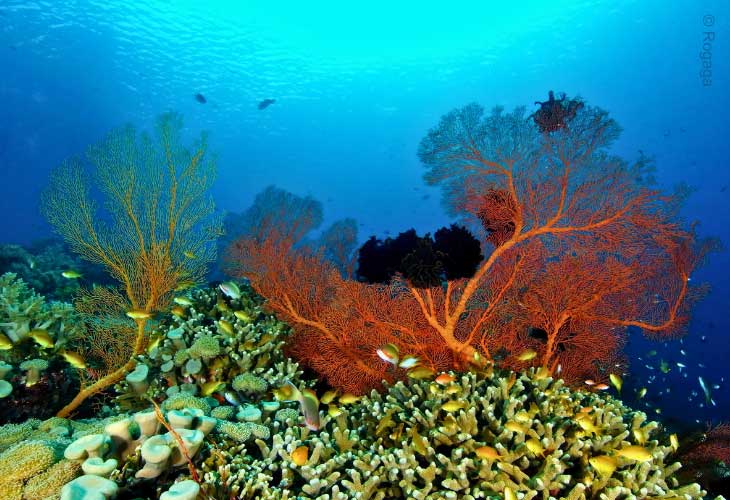
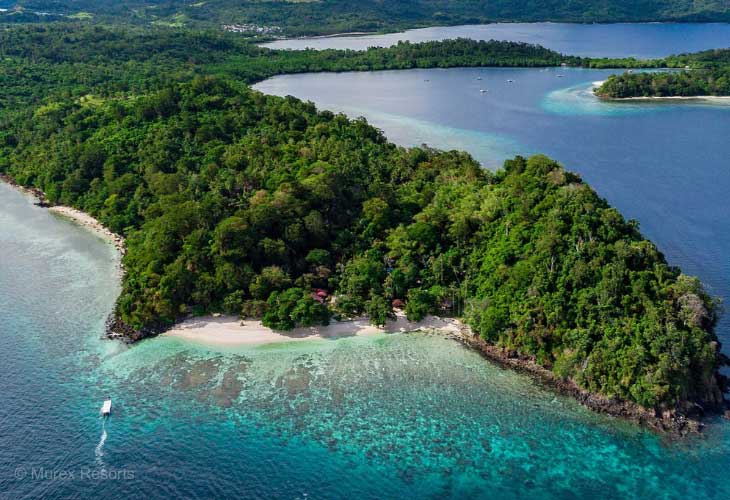
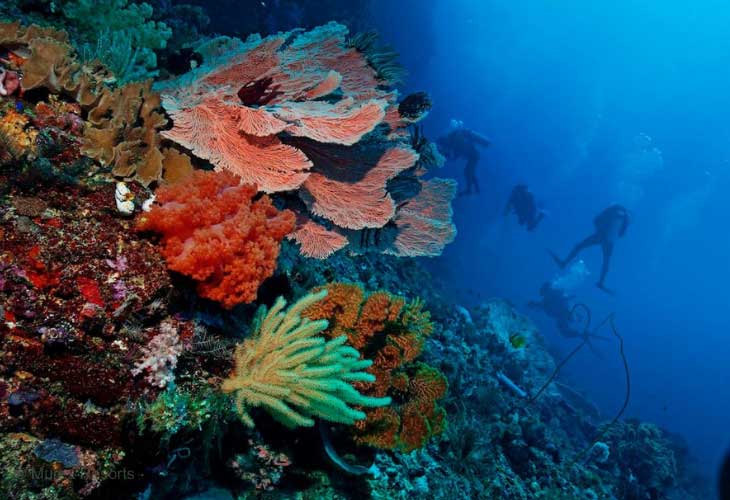
Located on the northern tip of Sulawesi, where the Celebes and Molucca Seas meet, Bangka and the surrounding islands are home to more than 30 world class dive sites. With tropical vegetation reaching right down to white sand beaches, your diving could vary from fringing reefs with a truly outstanding variety of colourful soft corals to (south and south-east Bangka) jagged pinnacles with strong currents that teem with fish life.
Diving Bangka Archipelago
It’s not possible to give an overall description of the area’s diving, however here are the main dive sites:
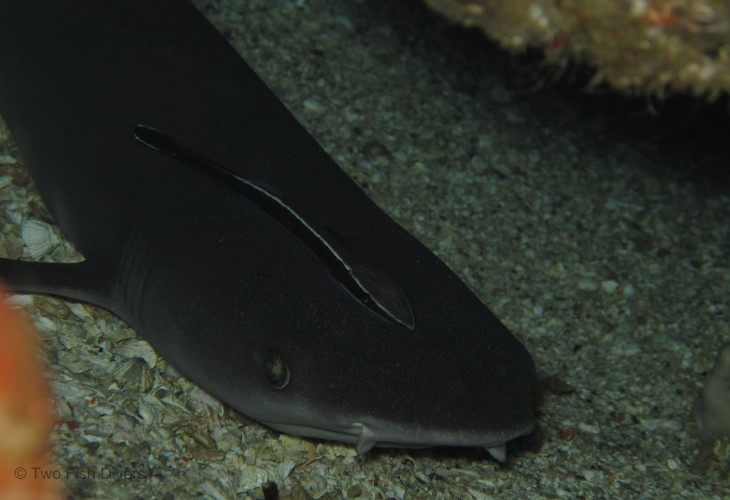
Batu Gosok: A very interesting dive site consisting of a group of steep, volcanic pinnacles. There are many sheltered spots to shelter from currents and inspect the pinnacles’ many vertical cracks and caves for hidden critters. But don’t forget to look out into the blue for White-tip and Black-tip reef sharks, turtles, groupers, mackerel and dog-tooth tuna.
Batu Mandi: A large rock which breaks the surface, forming a steep slope where you can find a wide variety of nudibranchs.
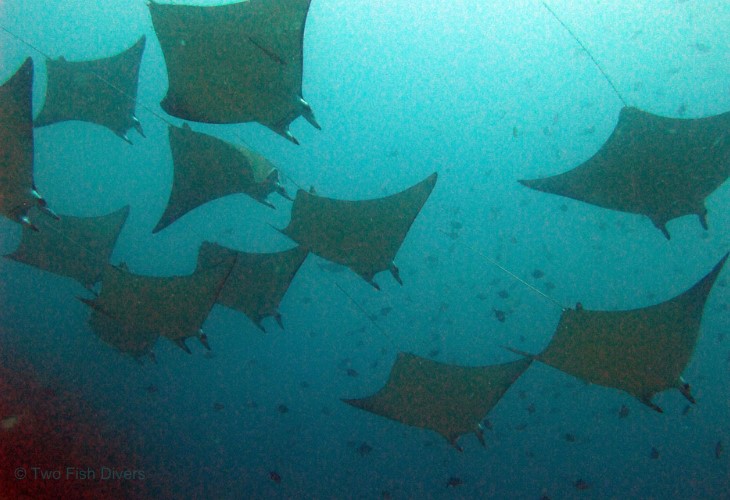
Batu Pendeta: Another pinnacle where the explosion of colour from the soft corals provides a wonderful backdrop for marinelife that includes angelfish, triggerfish, butterflyfish and unicornfish. From the drop-off you can expect to see dogtooth tuna, jacks and a variety of sharks.
Busa Bora: As the average depth of this coral slope is 17m, it’s a great site for night diving. Prolific and healthy corals where large gorgonian sea fans and tree corals take centre stage.
Peter’s Sponge: Although this is a superb muck/macro site, it’s also said to be ‘the’ place in Bangka to spot dugongs (certainly on my own wishlist 🙂). On the white sand slope you might find Blue-ring octopus, Flamboyant cuttlefish, ghost pipefish, glassfish, frogfish, Ambon scorpionfish, and similar.
Sahaung: (5-35m depth) A collection of underwater boulders and pinnacles provide two distinct dives. Prepare your cameras for huge table corals, carpets of frilled leather corals in pink, brown, lilac and creams, diverse reef life including White-tip reef sharks, schooling fish, and passing pelagics.
Bangka Archipelago Diving Conditions
Good year-round however March-June and September/October have nicer weather and better visibility (25m). Heavier rain can be expected November-February, with wind affecting some dive sites July/August. Surface conditions are usually calm with currents ranging from mild to strong depending on the dive site. Temperatures remain relatively constant at 28-29°C.
How to reach Bangka Archipelago
Bangka is situated between Bunaken National Marine Park and Lembeh Strait. The closest airport is Manado for both international and domestic flights. There are daily domestic flights from Jakarta and Bali. Carriers servicing the area are Garuda Indonesia, Air Asia and Sriwijaya Air. From Manado, the transfer to Bangka Island takes just over an hour by road then 20mins by boat.
North Sulawesi Dive Packages
Several North Sulawesi resorts and dive centres offer multi-destination packages that include Bunaken Marine Park, Bangka Archipelago, and Lembeh Strait. Anyone who’s experienced a Bali Dive Safari through AMD-B knows exploring several destinations in one extended dive trip can be the best way to make the most of the time you have available.
For more information on Bangka archipelago diving, dive resorts, transfers, and to start your planning, please contact AMD-B’s ‘Beyond Bali’ Dive Travel Consultant today. As always, they will be more than happy to offer recommendations and make arrangements to suit your preferences. Contact us on Tours@AquaMarineDiving.com today!