Save! Join a Scheduled Trip or Course; check our “Specials” for limited time offers; subscribe to eNews for discounts, freebies, bonus offers in Bali and Beyond.
Organize diving in Bali and throughout Indonesia for your dive club or group of friends. Our dedicated team of specialists work with travel agencies around the world.
Scorpionfish are a fascinating group of venomous reef fish known for their incredible camouflage and potent defensive spines. Belonging to the family Scorpaenidae, they are ambush predators that rely on stealth, lying motionless on the seafloor until prey comes close. With textured bodies and mottled colours, they blend effortlessly into coral, rocks, or sand.
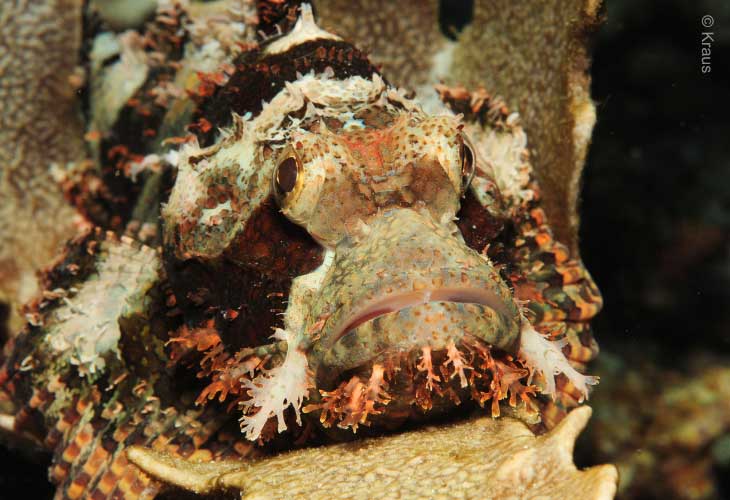
Papuan Scorpionfish (Scorpaenopsis papuensis)
This species is well-camouflaged with skin flaps and blotchy patterns, making it almost invisible on coral rubble. Found in shallow waters, it has a distinct large head and often displays reddish or brown tones. It’s common in Indonesian waters, including Bali.
Papuan Scorpionfish (Scorpaenopsis papuensis)
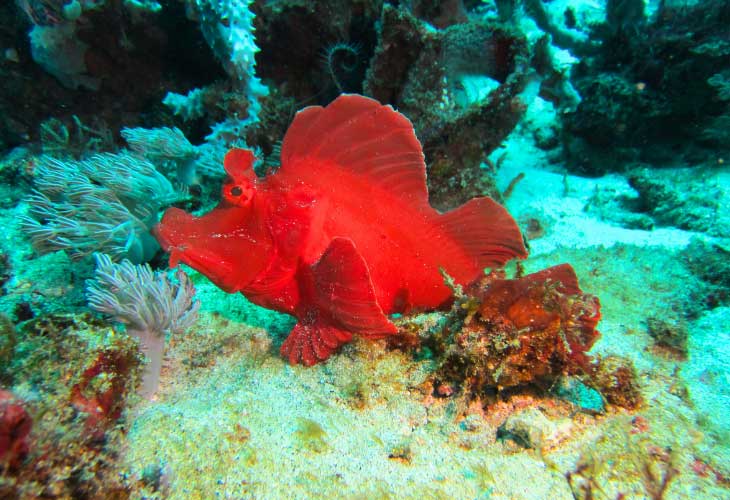
Paddle Flap Scorpionfish (Rhinopias eschmeyeri)
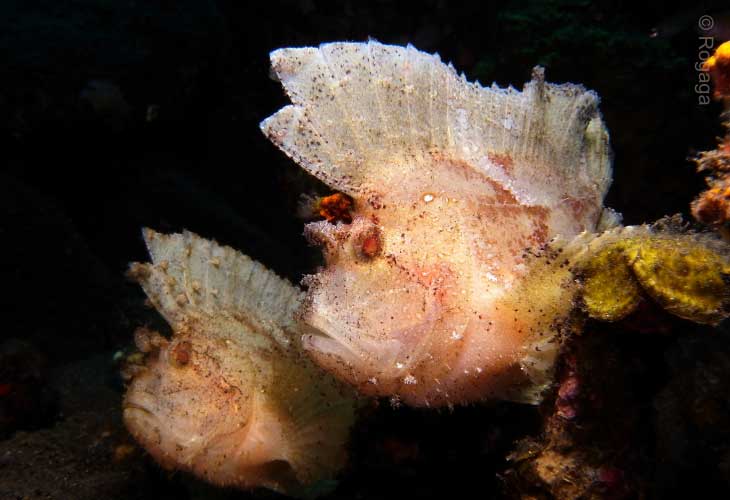
Rare and highly sought after by underwater photographers, this species has broad, paddle-shaped fins and soft, flowing skin appendages. Its bright red or pink colouration contrasts its reef habitat, yet its motionless behaviour helps it stay undetected.
Paddle Flap Scorpionfish (Rhinopias eschmeyeri)
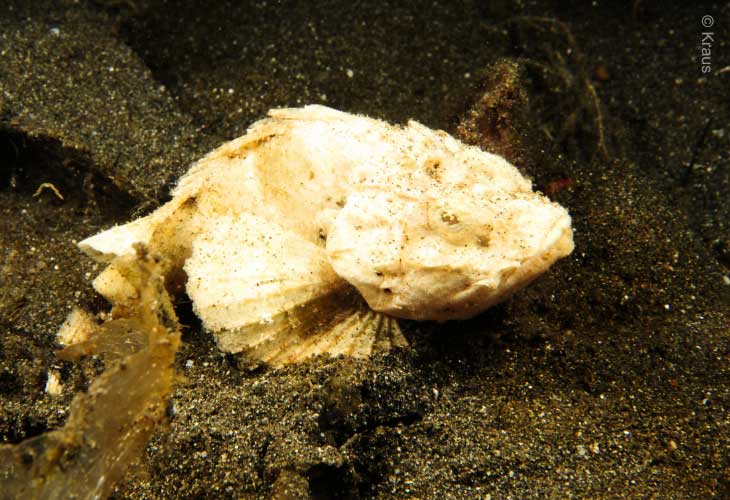
Devil Scorpionfish (Scorpaenopsis diabolus)
Named for its fearsome appearance, this scorpionfish has venomous spines and a stocky body. When threatened, it can expand its pectoral fins, revealing bold warning colors. Despite the name, it is non-aggressive unless provoked.
Denise’s Pygmy Seahorse (Hippocampus denise)
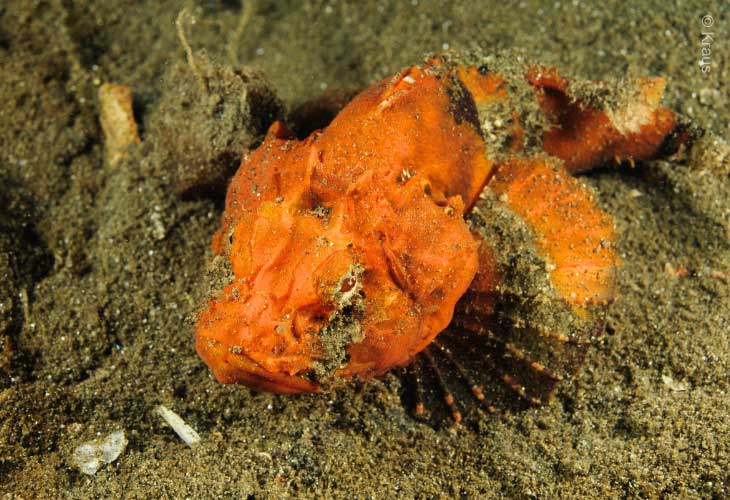
Flasher Scorpionfish (Scorpaenopsis macrochir)
This lesser-known species has extended pectoral fins used to startle predators. It is usually well-camouflaged, hiding among rocks and debris in sandy reef zones.
Flasher Scorpionfish (Scorpaenopsis macrochir)
Leaf Scorpionfish (Taenianotus triacanthus)
Unlike others, this species is flat and leaf-like, often swaying with water currents to mimic debris. It comes in various colours and is commonly seen in Bali’s coral reefs.
The Banda Islands are one of Indonesia’s top destinations for divers. Both experts and beginners will enjoy themselves here as the diving ranges from the shallow lagoon between Banda Neira and Gunung Api, to the vertical walls of Hatta Island, the most easterly in the group.
Located in Maluku (Molluca) province, the Banda Islands are 200km from the nearest port town of Ambon, and are made up of 9 islands. Long known for their spices, these islands have attracted regional and international traders for more than 3.000 years. The first Europeans arrived in 1500. The biggest and most valuable commodities were nutmeg and cloves as, at that time, they were only found in the Banda Islands.
Diving in Banda
Set in the heart of Indonesia, the remoteness of the Banda Islands along with the low levels of human population, have meant less fishing and pollution pressures resulting in a vibrant, natural and healthy reef system.
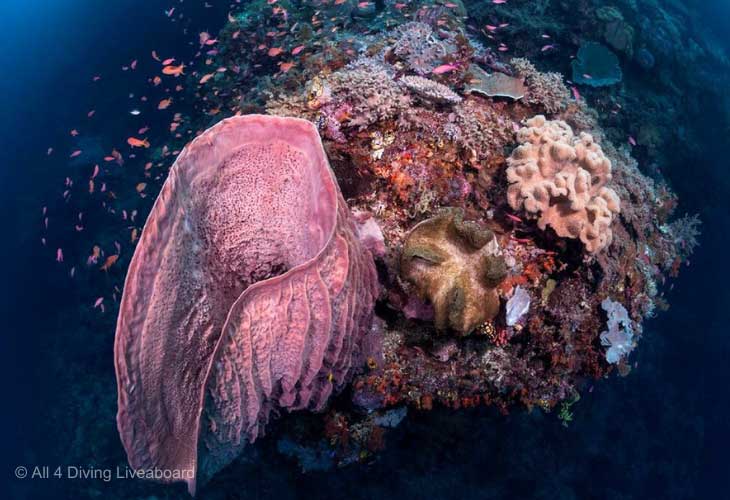
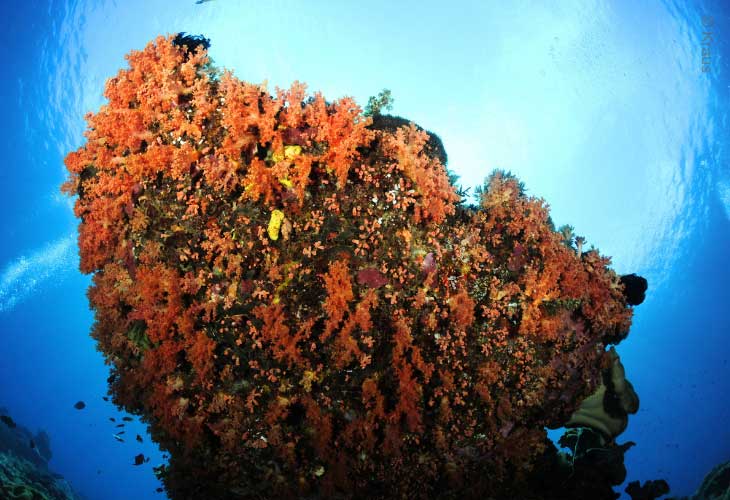
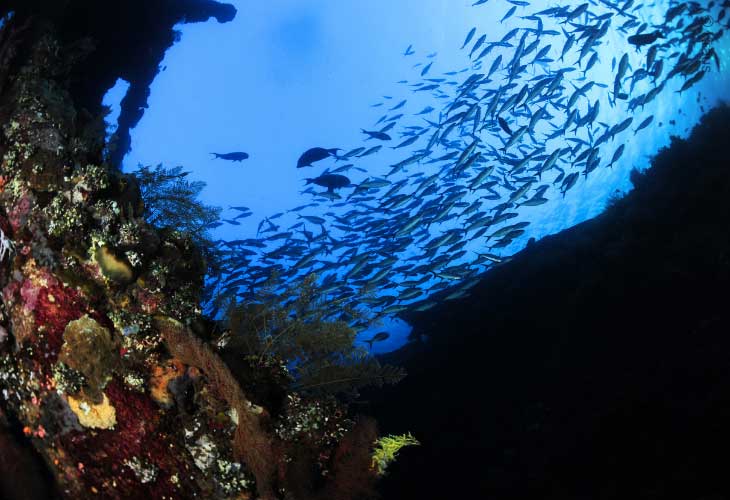
Diving in the Banda Islands offers amazingly colourful walls, drop-offs, bommies and pinnacles!
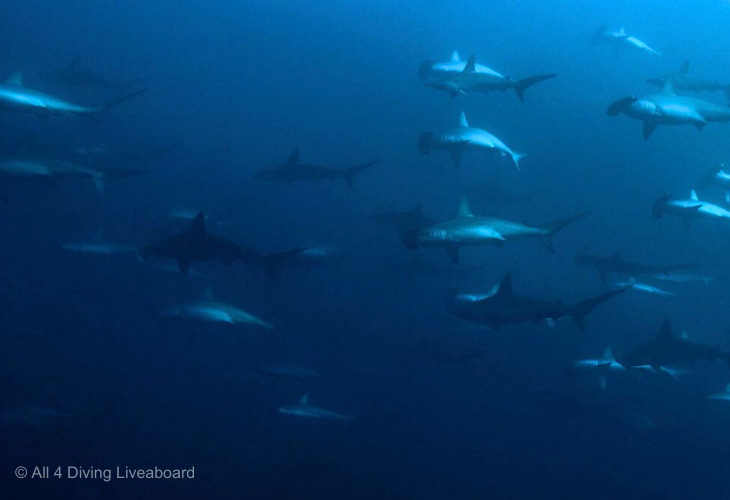
The very clear and nutrient-rich upwelling waters bring in schools of hammerhead sharks, and pelagics such as sunfish (Mola-Mola), Dogtooth tunas, reef sharks, and sailfish. There are various ‘hammerhead hotspots’ where – at certain times of the year (Sep-Nov is best) – schools of more than 200 hammerheads have been witnessed. Whales also frequently pass through the strait.
Banda Diving Season
Diving is usually comfortable with average visibility of 15-30 meters, mild currents and calm waters. December/January (NW monsoon) June-August (SE monsoon) can have turbulent seas. The ‘best’ months are April and October 🙂
How to reach Banda
The Banda Islands are often included in some liveaboard schedules when crossing from Komodo, Raja Ampat, Alor or Flores.
And of course dive resorts offer attractive diving/accommodation packages. There are domestic flights from Jakarta and Bali to Ambon via Ujung Pandang (Makassar), and from there to the Banda Islands.
For more info on the safari routes and durations at Banda Islands, and to start your planning, please make sure your AMD-B Travel Consultant is aware of your needs. As always, they will be more than happy to offer recommendations and make arrangements to suit your preferences. Contact us on Tours@AquaMarineDiving.com today!
Indonesia is a Global Hotspot for Marine Biodiversity
by Fahmi, AMD-B’s 2024 Divemaster Intern
Indonesia is a global marine biodiversity hotspot, hosting about 76% of the world’s coral species and approximately 37% of reef fish species, with over 2,200 reef-associated fish and 590 coral species thriving in its waters. So it’s safe to say that Indonesia is indeed a global hotspot for marine biodiversity, but the question now is why:
Strategic Location in the Coral Triangle
Indonesia is located in the Coral Triangle, a region known as the epicentre of marine biodiversity. The diverse coral species found in Indonesia are closely linked to the abundance of fish in the area. Corals are a key species in shallow water ecosystems, much like trees in a forest, supporting a wide range of marine life and making the region a hotspot for marine biodiversity.
Warm Tropical Waters
Indonesia’s climate is characterized by two seasons: wet and dry. While the wet season brings higher chances of rain at certain times of the year, the temperature remains relatively stable, creating an ideal environment for coral reefs to thrive. This consistency in water temperature, combined with strong sunlight exposure, supports coral health. Corals rely on sunlight for photosynthesis through their symbiotic relationship with zooxanthellae, the algae within their tissues.
Ocean Currents as Nutrient Highways
Strong ocean currents, such as those from the Indonesian Through-flow, funnel nutrient-rich water through the region. These nutrients support plankton growth, which forms the foundation of the marine food web. This abundance of food attracts fish, sharks, and larger marine animals, creating thriving ecosystems.